
All guides / Cat-Friendly Homes
How to Create a Cat-Friendly Apartment Without Renovating
At a glance
- Improve access, retreat and scratching opportunities before adding decor.
- Use the room’s existing routes and check stability and household hazards.
- Make one change at a time and watch how your cat responds.
In this guide
- Start with the five environmental needs
- Living room: Make space for watching, resting, and scratching
- Bedroom: Let your cat choose privacy
- Kitchen and dining area: Protect food and water access
- Litter area: Accessible, quiet, and easy to clean
- Entryway and balcony: Treat exits as safety zones
- Rental-friendly ways to add vertical space
- A low-budget apartment checklist
- Audit the apartment from your cat’s point of view
- Frequently asked questions
- Related guides
- Sources and further reading
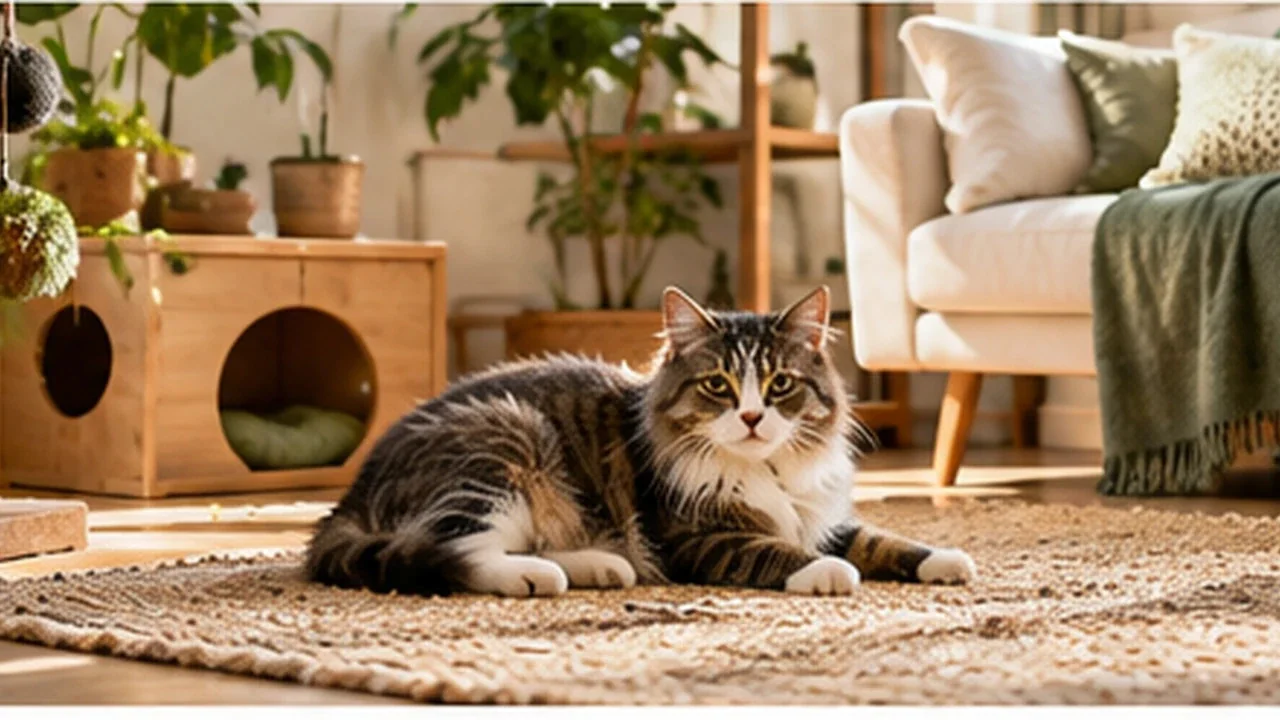
A cat-friendly apartment is not measured by square footage or the number of expensive cat accessories. A well-arranged home gives a cat safe places to retreat, routes between essential resources, opportunities to scratch and move, and the freedom to choose where to rest.
You can improve those things without drilling holes in a rental wall or buying an enormous cat tree. Start with the rooms your cat uses most and solve practical problems before decorating.
Start with the five environmental needs
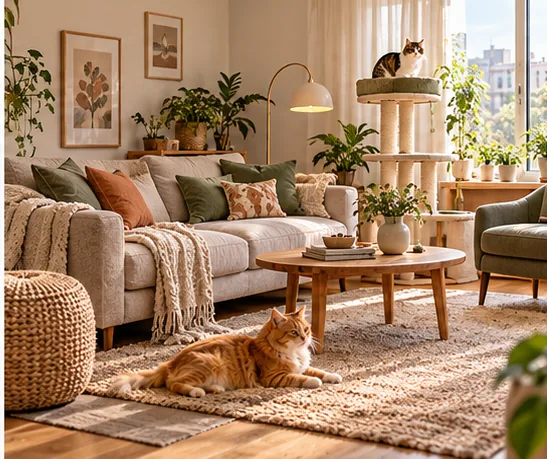
A cat-friendly room needs rest, scratching and open pathways. The pictured plants are unidentified: verify each species is non-toxic to cats and keep unsafe plants out of reach. AI-generated editorial illustration, not proof of plant safety.
The AAFP/ISFM feline environmental guidelines describe five broad pillars: safe places; multiple separated key resources; opportunities for play and predatory behavior; predictable positive interaction; and respect for cats’ sensory environments [1].
For apartment planning, translate these ideas into a simple question: Can my cat eat, drink, use the litter box, scratch, rest, and get away from disturbances without feeling trapped?
Living room: Make space for watching, resting, and scratching
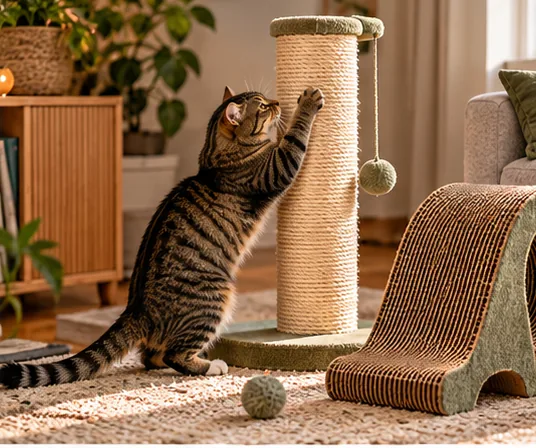
The scratching post is shown with a hanging pompom: inspect such attachments for loose string or detachable pieces and avoid leaving hazardous ones accessible. Choose stable scratching surfaces. AI-generated editorial illustration, not a safety-tested product.
Choose one secure window-adjacent resting place, ideally away from loud appliances. Keep windows closed or properly secured; an ordinary insect screen must not be treated as an assured fall barrier. The ASPCA warns about serious injuries from falls through open or inadequately protected windows [2].
Place a stable scratching post where your cat already scratches or regularly passes. Some cats prefer a horizontal cardboard scratcher instead of a tall post. The Ohio State Indoor Pet Initiative recommends matching scratching surface and placement to observed behavior [3].
Provide at least one private resting spot—a covered bed, a clean box, or a quiet space beneath sturdy furniture. Avoid squeezing every cat resource into one tight corner.
Bedroom: Let your cat choose privacy
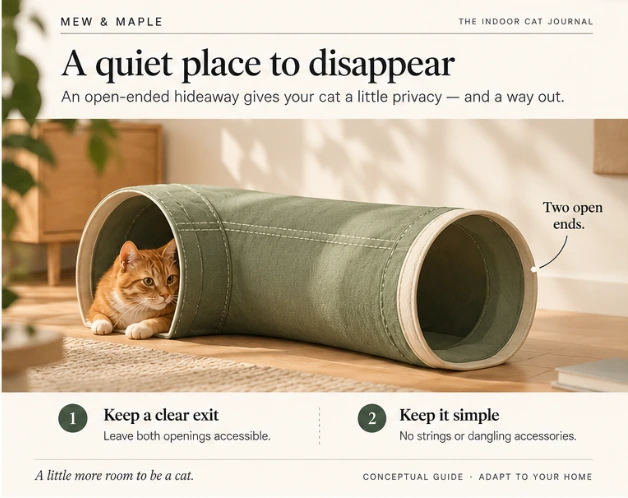
An open hideaway with a clear exit and no dangling accessories offers a simple retreat. User-supplied conceptual illustration, not a product installation guide. Open full-size illustration
A familiar blanket, washable bed, or accessible quiet nook can become a reliable retreat. If your cat sleeps in the bedroom, keep pathways clear and avoid unstable bedside towers or open windows next to jumping surfaces.
In homes where doors are closed at night, ensure essential resources remain accessible on whichever side your cat will spend time.
Kitchen and dining area: Protect food and water access

Keep feeding, drinking and toileting in distinct, easily accessible locations. User-supplied conceptual illustration; adapt to your floor plan. Open full-size illustration
Keep your cat’s water accessible and away from areas where cleaning chemicals, heat, or heavy foot traffic create risks. Separate water from the litter box; many households also find it practical to position water and food in distinct places, in line with environmental resource recommendations [1].
Secure household cleaners, medications, sharp tools, and accessible cords. Check plants and flowers against a trustworthy toxicity source before bringing them inside. Do not assume a plant is cat-safe because it is common in home-decor photos.
Litter area: Accessible, quiet, and easy to clean
Place the litter box in an easy-to-reach location that offers enough privacy without trapping the cat in a corner. Avoid positioning it right next to food or water or in a location where a washing machine might suddenly startle your cat.
For households with more than one cat, separate boxes are especially important; Cats Protection recommends one litter tray per cat plus one extra where practical, distributed in different places [4].
Entryway and balcony: Treat exits as safety zones
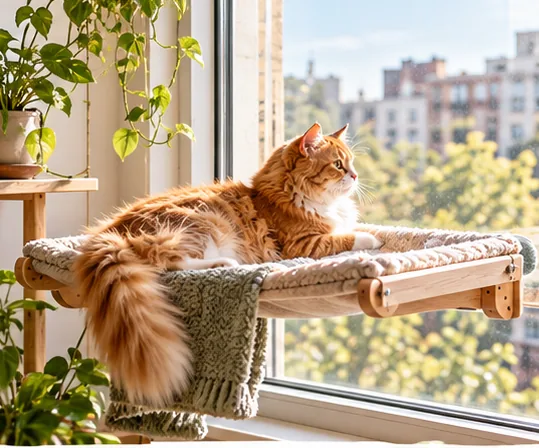
The depicted window shelf is illustrative, not an approved mounting design. Secure windows and use only a perch installed to verified manufacturer specifications. AI-generated editorial illustration.
Use a routine that prevents accidental escapes when guests enter. A closed interior door or other physical separation is more dependable than hoping a curious cat will not follow you.
Never allow unsupervised balcony access without a purpose-built, appropriately secured cat-safe enclosure. A high railing is not an adequate fall-prevention system. Keep furniture away from unsecured openings that could tempt a jump.
Rental-friendly ways to add vertical space
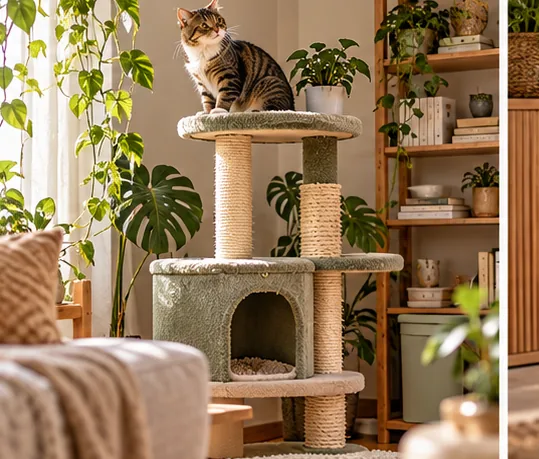
Freestanding furnishings can offer vertical space when safely installed. AI-generated editorial illustration.
If drilling is not allowed, a sturdy freestanding cat tree with a broad base may provide a useful perch. For wall shelves, follow structural fixing instructions and obtain permission where required. Adhesive decorative shelves are not automatically rated to support a jumping cat.
Older or mobility-limited cats may prefer low stepped furniture, ramps designed for pets, or accessible floor-level hiding spots rather than high climbs.
A low-budget apartment checklist
- At least one secure hiding spot away from disturbance
- A comfortable resting area and safe viewing option
- Scratching surface matched to your cat’s preferred orientation
- Clear path to food, water, and litter
- Closed or properly protected windows and balcony access
- No reachable toxic plants, loose cords, or unstable stacks
- Space for short supervised play sessions
- Cleanable surfaces and a practical storage spot for unsafe toys
Work through one room at a time. Your goal is not a picture-perfect showroom; it is a home that works for the cat and the humans living there.
Photo-safety note: This guide’s AI illustrations may contain unknown plant species or product attachments. They are not evidence that a specific item is safe for cats. Confirm plant toxicity, fit and installation independently.
Audit the apartment from your cat’s point of view
Walk the route from the main sleeping place to the litter box, food and water. Can doors close off access? Does the route pass a washing machine, noisy hallway, or a spot where another pet may block the way? Give your cat alternatives before adding decorative furniture.
Then check the room at floor level: loose cords, unstable shelves, reachable medicines, cleaners and plants, or small objects that could be swallowed. Review the window and balcony arrangements separately; ordinary insect screens should not be assumed to prevent falls. If you rent, confirm permissible fixing methods and follow the furniture manufacturer’s anchoring instructions instead of improvising mountings.
Finally, assess whether an older or mobility-limited cat can access key resources without jumping. Low-entry litter boxes and reachable resting spots may offer more practical benefit than another high perch. Make one change at a time and observe whether your cat chooses to use it.
Frequently asked questions
Can a cat be happy in a studio apartment? Apartment size alone does not tell you whether a cat’s environmental needs are met. Assess resources, safe places, movement opportunities, play, and the individual cat’s behavior.
Do I need to buy special cat furniture? Not always. Secure existing furniture, a scratching surface, a cardboard hiding box, and a simple play routine can provide many useful features.
Are indoor plants safe around cats? Safety depends on the species and the cat. Research each plant before placing it within reach, and contact a veterinarian or pet poison service promptly after a suspected toxic exposure.
Related guides
- 15 Indoor Cat Enrichment Ideas
- Best Cat Trees for Small Apartments
- How to Set Up a Home for Two Indoor Cats
Sources and further reading
- AAFP/ISFM, Feline Environmental Needs Guidelines: https://pmc.ncbi.nlm.nih.gov/articles/PMC11383066/
- ASPCA, High-Rise Syndrome: https://www.aspca.org/news/high-rise-syndrome-lifesaving-tips-cat-parents
- Ohio State University Indoor Pet Initiative, Scratching: https://indoorpet.osu.edu/node/449
- Cats Protection, Preparing Your Home for a Cat: https://www.cats.org.uk/help-and-advice/getting-a-cat/preparing-for-a-cat
Editorial note: This guide is about household environment and does not replace individualized veterinary or structural safety advice.
Illustration note: Images are original AI-generated editorial illustrations, not photographs of tested products or certified-safe installations. Follow the written safety guidance and manufacturer instructions rather than copying incidental visual details.
Keep exploring
Best Cat Trees for Small Apartments: What to Look For Before You Buy
Find a cat tree that fits a small apartment. Compare footprints, stability, perch size, access, scratching surfaces, and cleaning needs.
Read the guide →
DIY Cat Toys Using Things You Already Have: A Safety-First Guide
Make simple cat enrichment activities with cardboard boxes and household items while avoiding unsafe strings, loose parts, and choking hazards.
Read the guide →
How to Keep Your Indoor Cat Entertained While You're at Work
Create a safer, more interesting day for your indoor cat while you're at work with a practical before-work checklist and low-maintenance activities.
Read the guide →Cat behavior and needs vary. For sudden behavioral changes, health concerns, or individualized medical advice, speak with your veterinarian.
← Explore more guides