
All guides / Everyday Cat Life
How to Set Up a Home for Two Indoor Cats Without Creating Competition
At a glance
- Give each cat separated choices for essential resources.
- Look for guarded routes and avoid forcing sharing.
- Plan rest and retreat across the whole home, not around one shared cat tree.
In this guide
- Start with resources, not a shared play area
- Make the litter-box plan work in real rooms
- Create two comfortable rest zones
- Feed with less pressure
- Recognize subtle signs of tension
- Introducing a second cat: go slowly
- A practical small-apartment example
- Watch access, not just the number of resources
- Frequently asked questions
- Related guides
- Sources and further reading
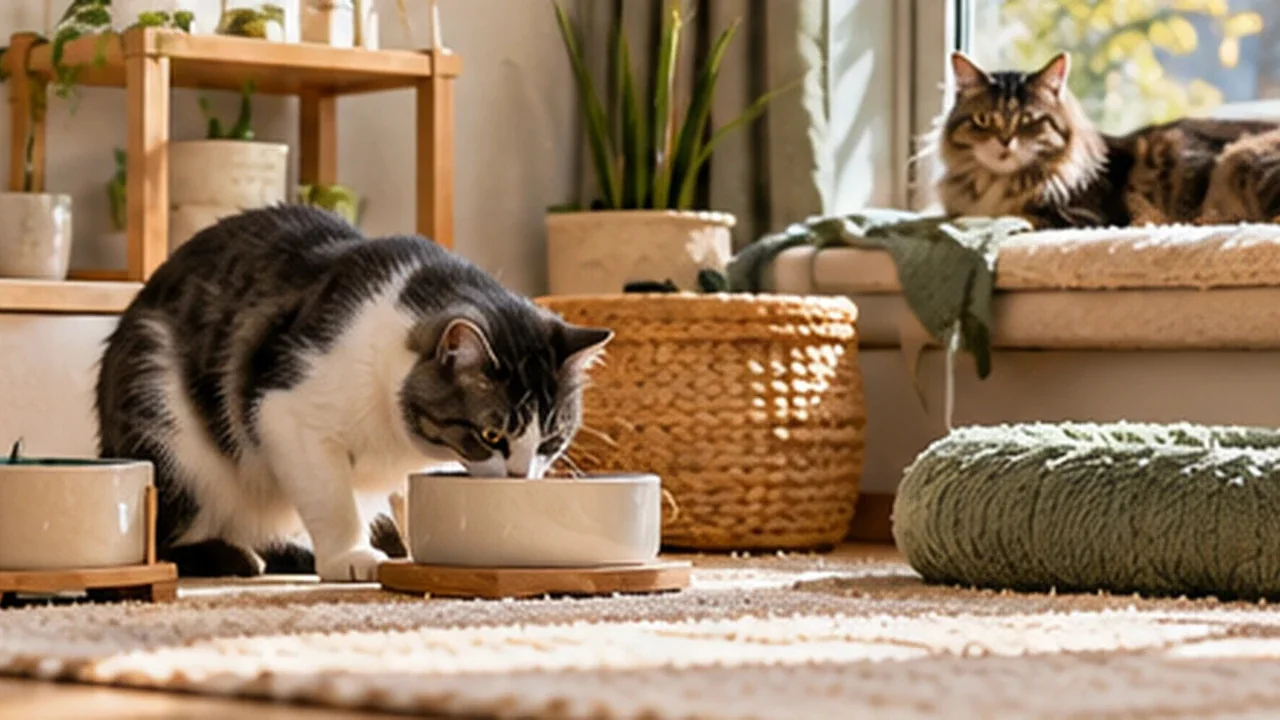
Two cats sharing a home do not necessarily want to share every bowl, bed, doorway, or favorite perch. Even cats that sleep close together may prefer separate access to food, water, litter, scratching, and resting places.
The key principle is choice without confrontation. Give both cats more than one way to meet basic needs, and arrange those resources so one cat cannot easily control the other’s access.
Start with resources, not a shared play area
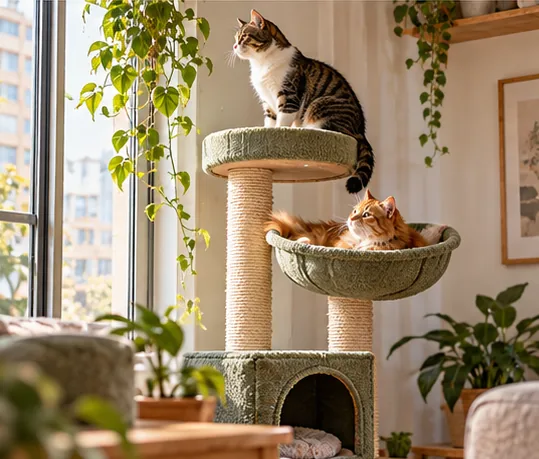
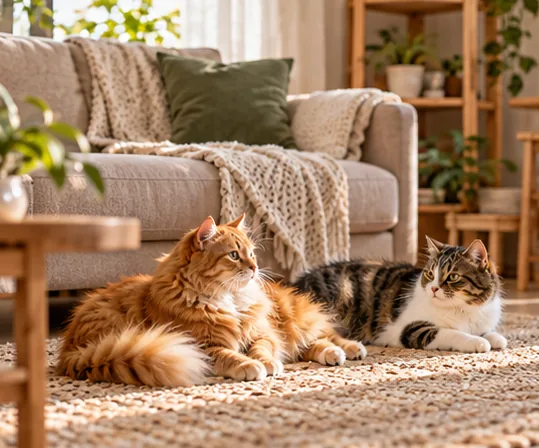
Offer more than one comfortable spot to reduce competition. AI-generated editorial illustration.
AAFP/ISFM guidelines recommend multiple separated essential resources, particularly in multi-cat households [1]. Cats Protection advises providing one essential item per cat plus one spare where possible, with items in different locations [2].
For two cats, that often means planning for:
- Three litter trays in separate, accessible areas where practical.
- More than one water location so neither cat can monopolize a bowl.
- Separate feeding stations, ideally with enough distance or visual separation to reduce competition.
- Multiple beds and hiding places, including some that cannot easily be blocked.
- More than one scratcher, with vertical and horizontal options if they suit the cats.
- Several safe elevated and floor-level resting choices, appropriate for each cat’s mobility.
The formula is a helpful starting point, not a guarantee of harmony. Layout and the cats’ behavior matter just as much as the count.
Make the litter-box plan work in real rooms
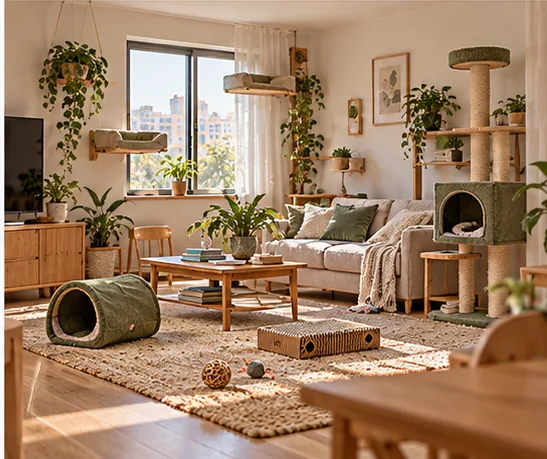
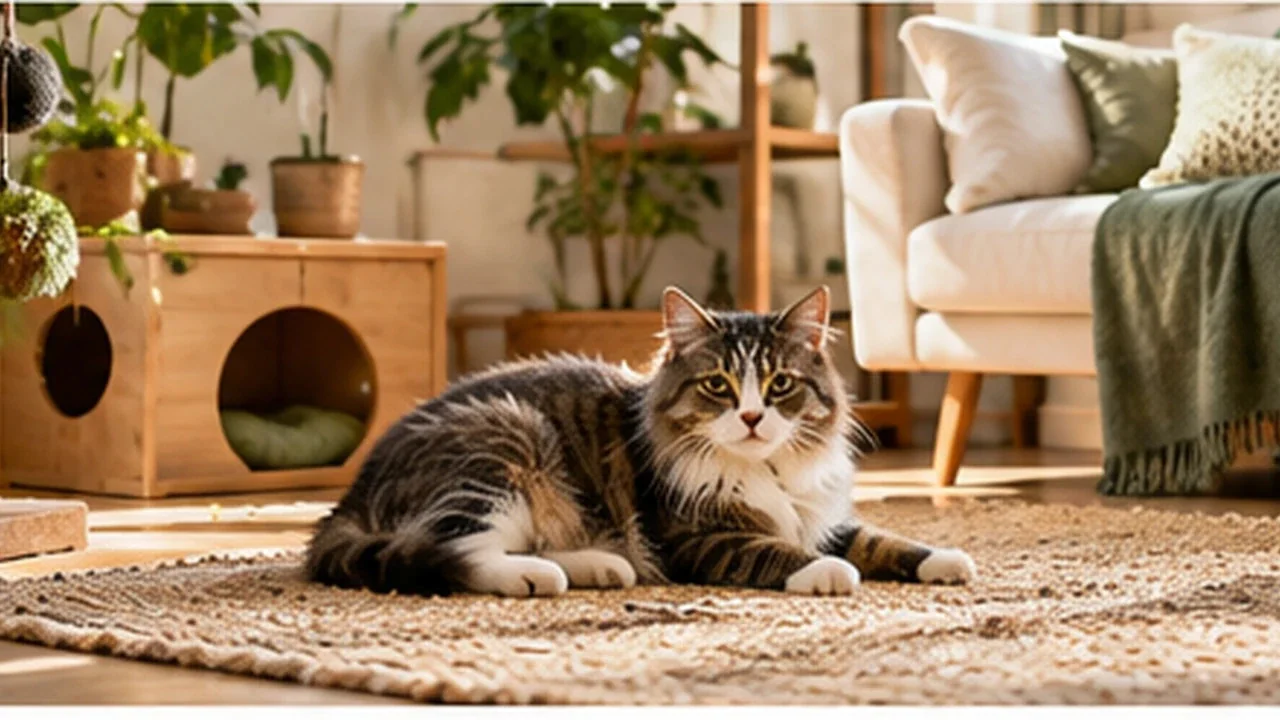
The depicted room offers separate resting places, but loose woven toy balls are visible on the floor. Check for fraying or removable parts and do not assume they are safe when unattended. AI-generated editorial illustration.
Do not line up three litter boxes directly beside one another and assume they function like separate locations. Spread them out when possible so one cat cannot block all access from a single hallway.
Choose calm, easy-to-reach areas rather than tight dead ends. Consider whether a more timid cat has a clear escape route. Clean boxes regularly, and watch for changes in use.
If a cat begins urinating or defecating outside the litter box, consult a veterinarian rather than assuming spite or territorial behavior; there can be medical causes.
Create two comfortable rest zones
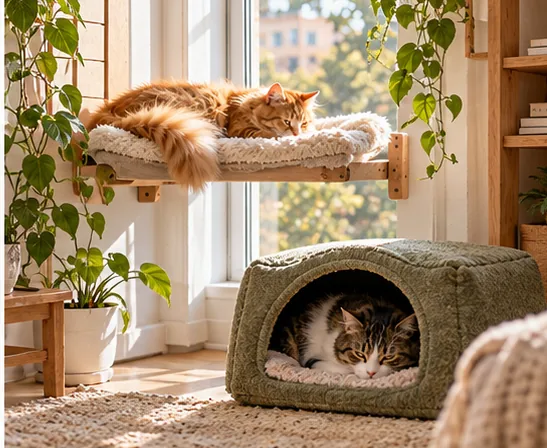
Cats can benefit from resting places separated in space and height. AI-generated editorial illustration.
Each cat should have somewhere to rest out of the other’s direct view. A clean box, a bed behind furniture, a low shelf, or a secure elevated perch can provide that choice. In small apartments, a room divider or carefully placed furniture may create visual separation without adding much floor area.
Avoid making a single high platform the only appealing resting option. Some cats may guard highly valued spaces even without obvious fighting.
Feed with less pressure
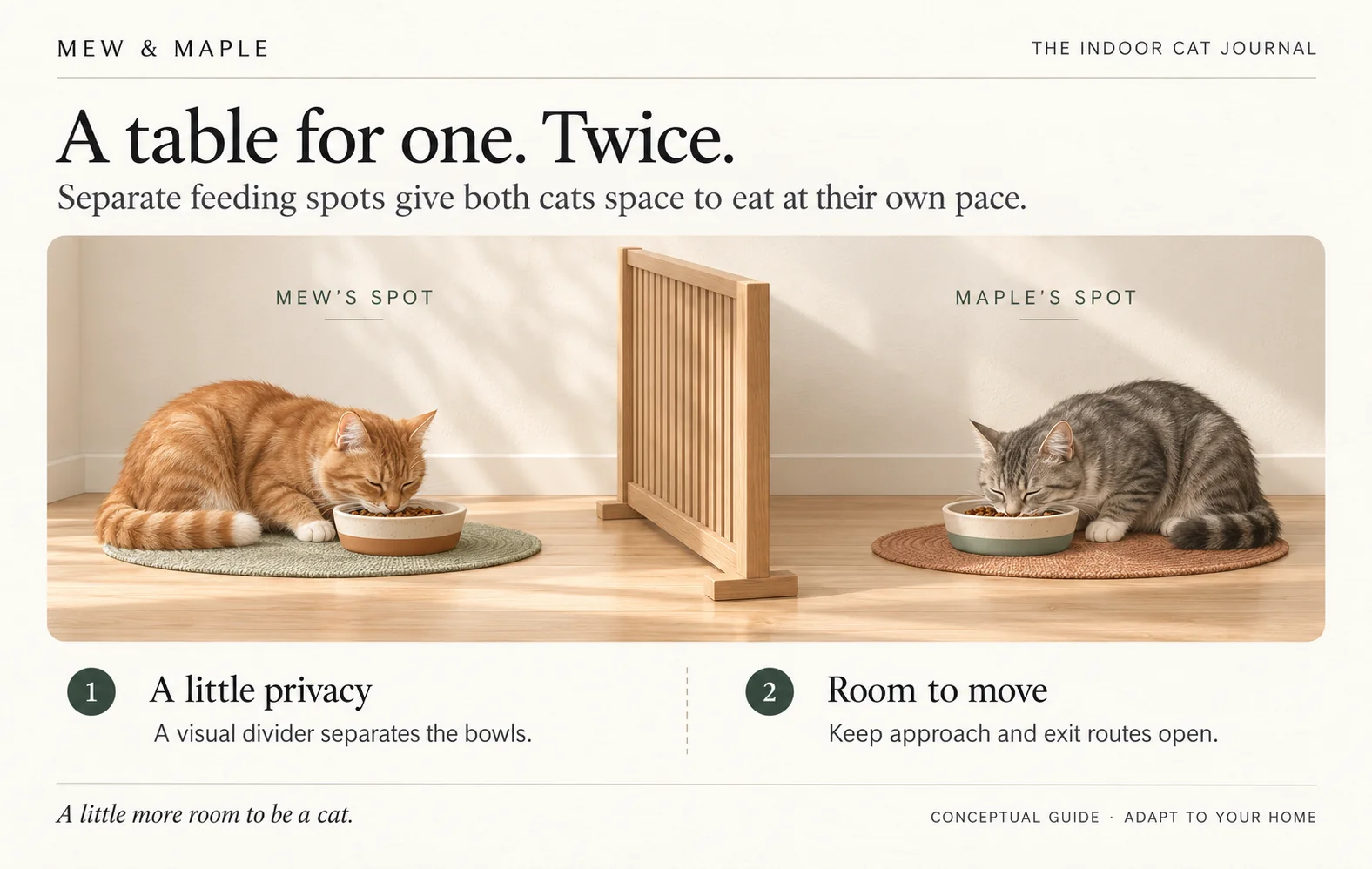
Provide separated feeding stations with more than one route of access where possible. Editorial illustration shows a principle rather than fixed floor-plan measurements. Open full-size illustration
Set up distinct feeding locations rather than placing bowls close together. Monitor whether one cat finishes quickly and approaches the other’s food. If the cats have different diets or medical needs, ask your veterinarian how to manage separate meals.
Water should also be available at more than one location. A single fountain is convenient but may still become a point of competition.
Recognize subtle signs of tension
Watch for subtle avoidance and blocking, not only obvious fighting. AI-generated editorial illustration.
Conflict is not always dramatic. Cats Protection lists signs that may include persistent staring, blocking doorways or litter access, one cat repeatedly taking resting places, hiding, avoidance, or fighting [3][4].
One cat may appear calm while quietly avoiding an area controlled by the other. Look at where each cat chooses to spend time and whether both use resources freely.
Do not force the cats to share a bed, play session, or feeding area. Increase distance and choices, and seek support from a veterinarian or qualified feline behavior professional for persistent conflict.
Introducing a second cat: go slowly
If the cats have not met, start with a separate sanctuary room for the newcomer. Give the new cat food, water, litter, a comfortable bed, and hiding options. Then gradually introduce scent information before arranging controlled, low-pressure visual contact.
Cats Protection advises progressing at the cats’ own pace; some cats tolerate a companion quickly, while others need weeks or longer, and some may never be comfortable living together [4].
Do not skip directly to an unsupervised meeting because the cats looked calm through a door. If either shows stress, return to an easier stage. This is one area where individualized professional guidance can be particularly valuable.
A practical small-apartment example
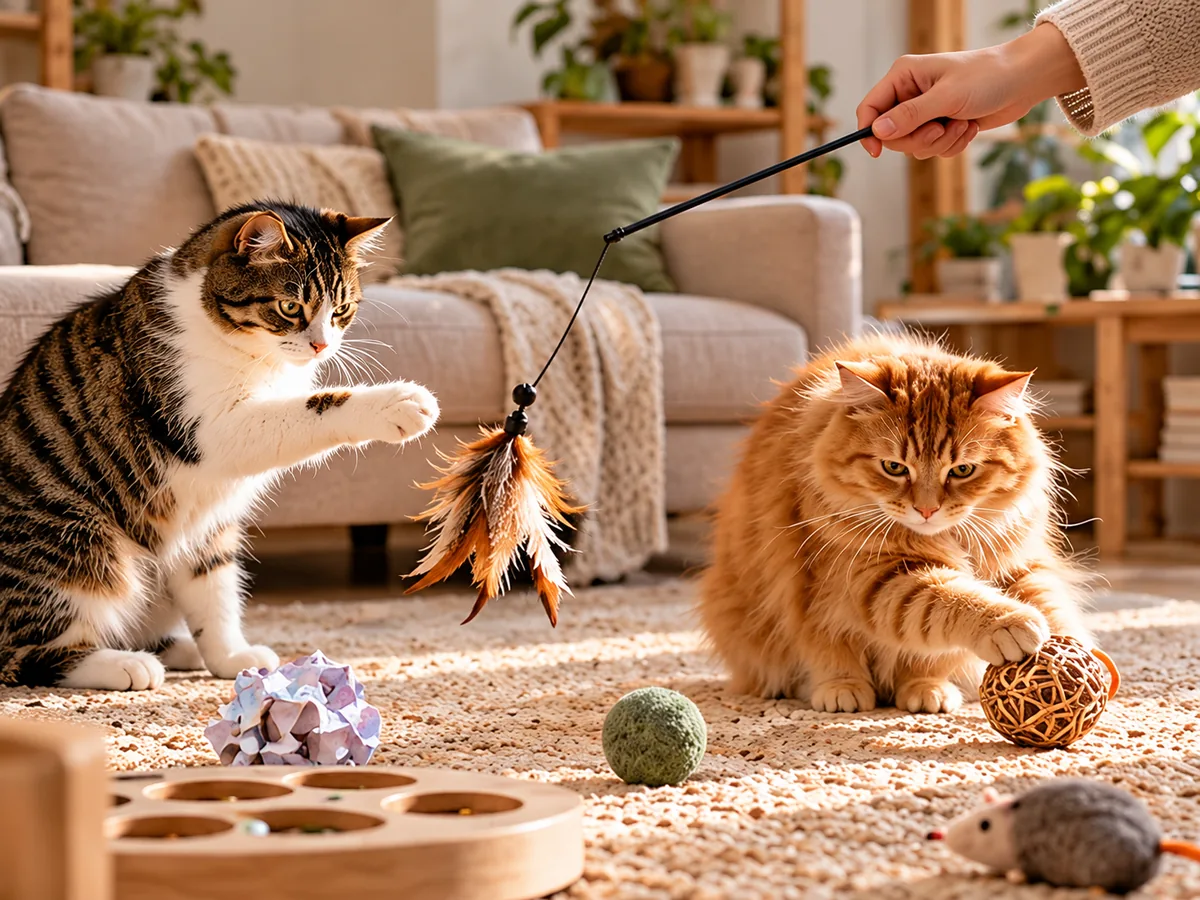
The wand is held by a supervising adult. Inspect the pictured woven and plush floor toys for loose fibers or parts and remove any item that a cat chews or damages. AI-generated editorial illustration, not certification of toy safety.
Imagine a living room, bedroom, and hallway. You might place one bed and scratcher in the living room, another quiet retreat in the bedroom, and separate feeding places out of sight of each other. Litter boxes should be distributed across suitable accessible places rather than tightly clustered.
The exact positions depend on your floor plan. Avoid putting resources in noisy, dangerous, or easily blocked areas simply to achieve a specific number.
Watch access, not just the number of resources
An adequate count of bowls or litter boxes does not help if one cat can guard a narrow doorway or stare down the other near a resource. Observe each cat separately: can both reach food, water, litter and resting places without being chased, blocked or forced to pass the other cat?
Try placing essential resources in different locations with more than one route of approach or retreat. Avoid lining several bowls or trays together and counting them as independent options. Provide visually separated retreats and do not force cats to share a high-value perch.
Record persistent hiding, guarding, chasing, litter avoidance and changes in appetite. These signs can reflect conflict or health problems and merit veterinary assessment; avoid assuming the cats will simply work it out.
Frequently asked questions
Do bonded cats need separate bowls? Yes, it is sensible to provide separate access even when cats appear affectionate. Relationships and preferences can change [1].
Is one large cat tree enough for two cats? It may be enjoyed by both, but it should not be the only valuable elevated or resting option. Provide alternatives in different areas.
Can two cats share one litter box? Some do, but offering multiple boxes in separate locations is preferable and reduces dependence on one resource [2].
Related guides
Sources and further reading
- AAFP/ISFM, Feline Environmental Needs Guidelines: https://pmc.ncbi.nlm.nih.gov/articles/PMC11383066/
- Cats Protection, Preparing Your Home for a Cat: https://www.cats.org.uk/help-and-advice/getting-a-cat/preparing-for-a-cat
- Cats Protection, Getting Another Cat: https://www.cats.org.uk/help-and-advice/caring-for-your-cat/cats-and-your-family/other-cats
- Cats Protection, Introducing Cats: https://www.cats.org.uk/help-and-advice/caring-for-your-cat/cats-and-your-family/introducing-cats
Editorial note: This article is general environmental guidance. Persistent conflict or health changes require professional advice.
Illustration note: Images are original AI-generated editorial illustrations, not photographs of tested products or certified-safe installations. Follow the written safety guidance and manufacturer instructions rather than copying incidental visual details.
Keep exploring
How to Create a Cat-Friendly Apartment Without Renovating
Make your apartment more cat-friendly with safe hiding places, scratching areas, vertical space, and a room-by-room checklist.
Read the guide →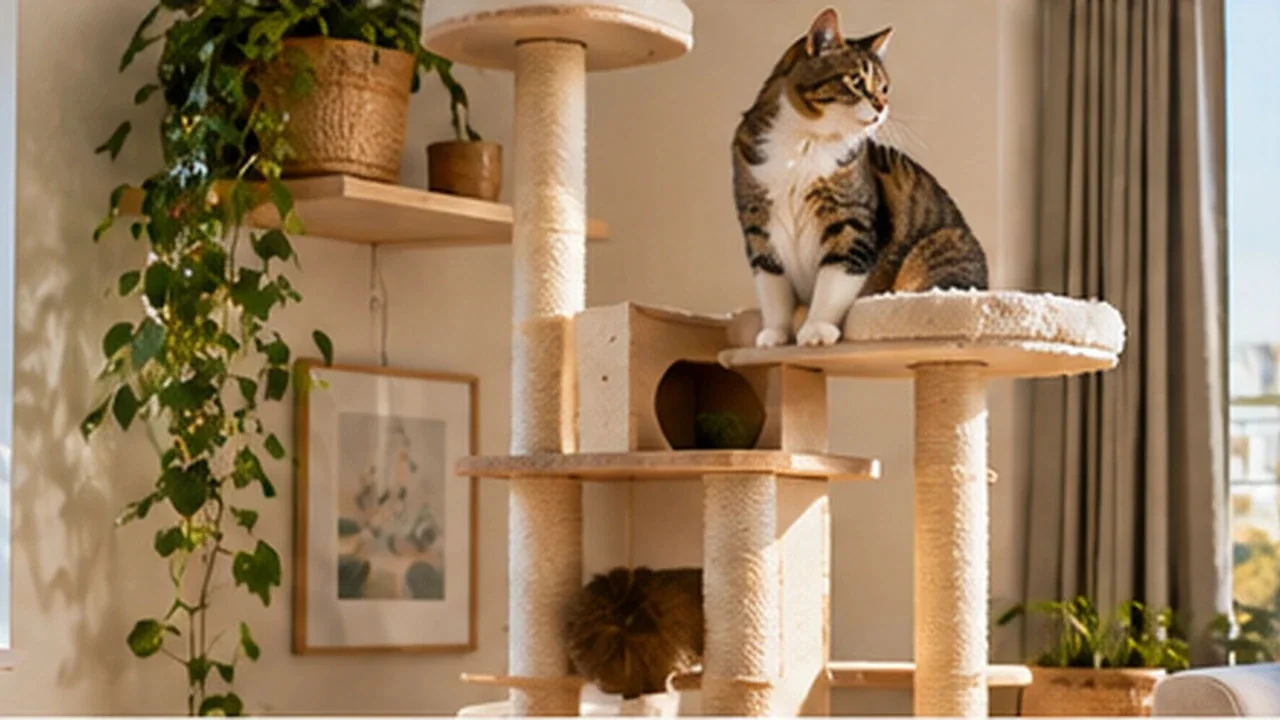
Best Cat Trees for Small Apartments: What to Look For Before You Buy
Find a cat tree that fits a small apartment. Compare footprints, stability, perch size, access, scratching surfaces, and cleaning needs.
Read the guide →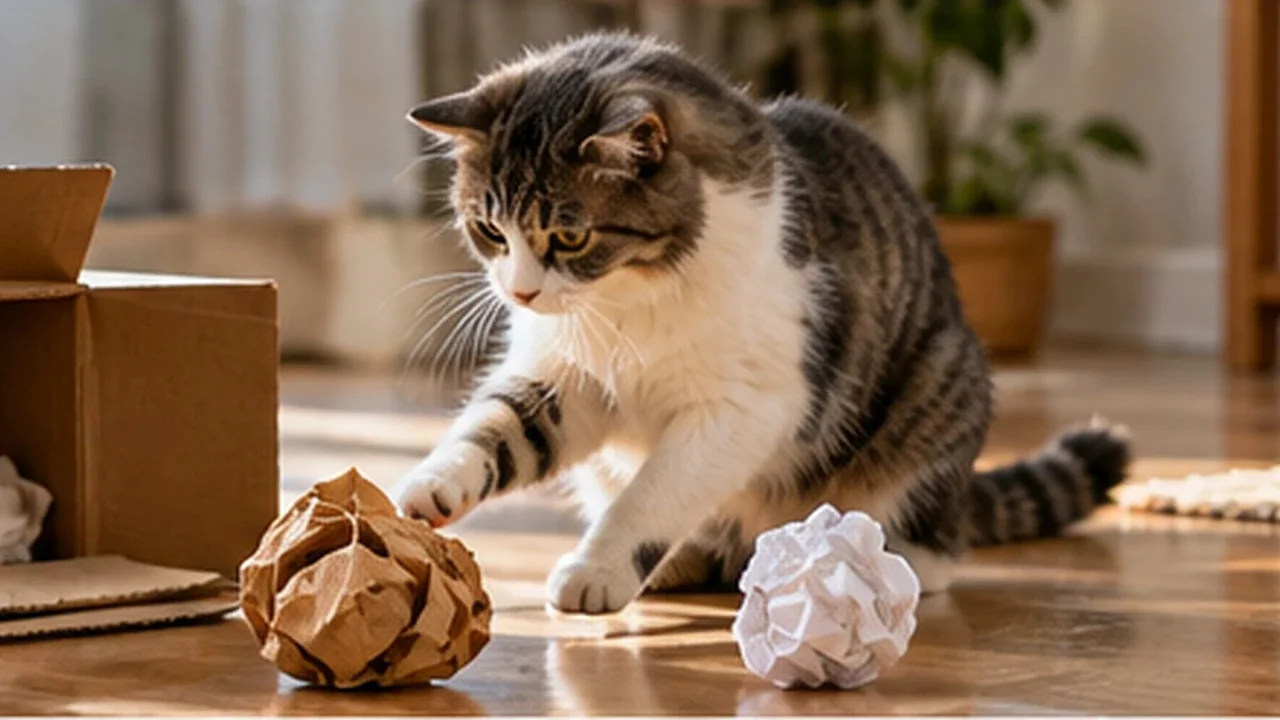
DIY Cat Toys Using Things You Already Have: A Safety-First Guide
Make simple cat enrichment activities with cardboard boxes and household items while avoiding unsafe strings, loose parts, and choking hazards.
Read the guide →Cat behavior and needs vary. For sudden behavioral changes, health concerns, or individualized medical advice, speak with your veterinarian.
← Explore more guides