
All guides / Play & Enrichment
15 Indoor Cat Enrichment Ideas That Don't Require a Big Home
At a glance
- Start with one activity your cat already enjoys, then add variety gradually.
- Balance movement, investigation and comfortable places to rest.
- Supervise new activities and put string or feather toys away after play.
In this guide
- A quick safety rule before you start
- 15 ideas to try
- Adapt enrichment for senior cats and limited mobility
- Build a routine that fits your cat
- When enrichment is not the whole answer
- Frequently asked questions
- Explore related indoor-cat topics
- Choose the next activity based on what your cat already does
- Sources and further reading
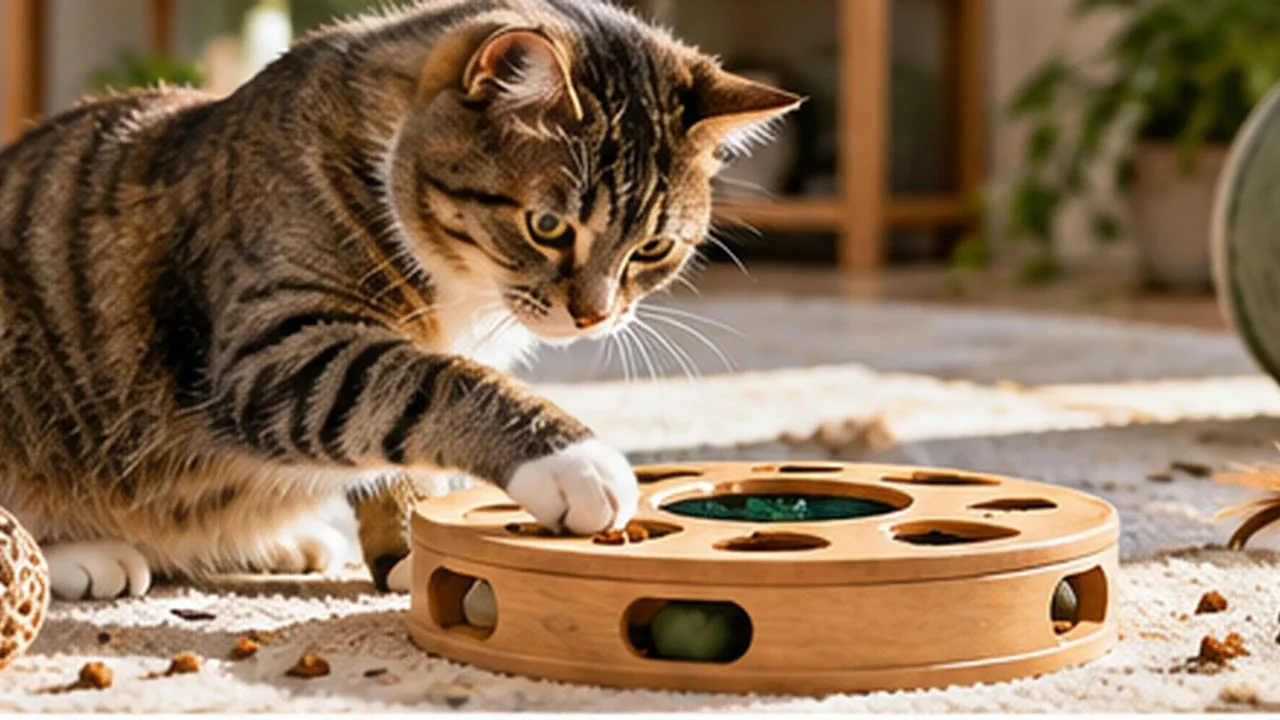
Indoor cats do not need a giant house or a closet full of gadgets to have interesting days. They do need opportunities to do normal cat things: explore, scratch, climb, hide, hunt through play, eat in engaging ways, and choose when to rest or interact.
The easiest place to begin is not a shopping list. Watch what your cat already enjoys. Does your cat watch birds from a window, race after a rolling ball, hide inside boxes, or sit on the highest shelf? Use those preferences to choose two or three activities, and change one element at a time.
A quick safety rule before you start
Not every toy is suitable for independent play. Put away string, ribbon, yarn, fishing-rod toys, loose feathers, elastic, and anything with swallowable pieces when playtime ends. Inspect toys for damage, and supervise new activities until you know how your cat uses them. Cornell University’s Feline Health Center recommends avoiding toys with small pieces and strand-like parts that may be swallowed [1].
15 ideas to try
1. Offer a stable window viewing spot
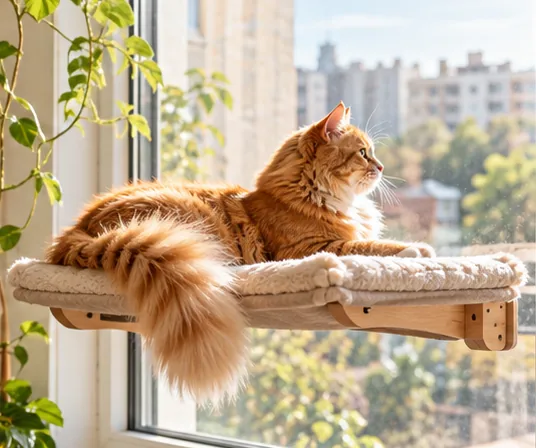
Window viewing can offer gentle visual enrichment. Keep the window secured. AI-generated editorial illustration.
Set a secure cat perch or a comfortable bed next to a closed, secured window. Watching outdoor movement can make a familiar room more interesting. Never rely on an insect screen as a fall barrier without confirming it is robustly installed and cat-safe.
2. Rotate a small toy collection
Keep a few sturdy toys accessible and store the rest. Swap them every few days rather than buying something new every week. Rotation can renew interest, although each cat’s response will differ [1].
3. Use a food puzzle for part of a meal
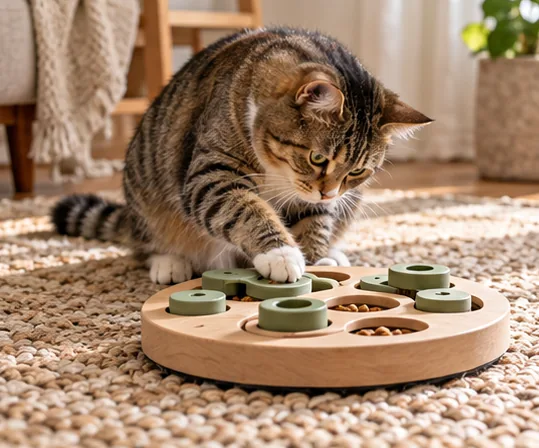
Begin with an easy food puzzle and use part of the usual meal. AI-generated editorial illustration.
Start with an easy puzzle that allows your cat to retrieve a few pieces of its regular food. Increase difficulty gradually. Count the food toward the cat’s usual daily ration; do not add extra calories just to make a game work. Ask your veterinarian before changing food access for a cat with medical needs.
4. Give cardboard boxes a second life
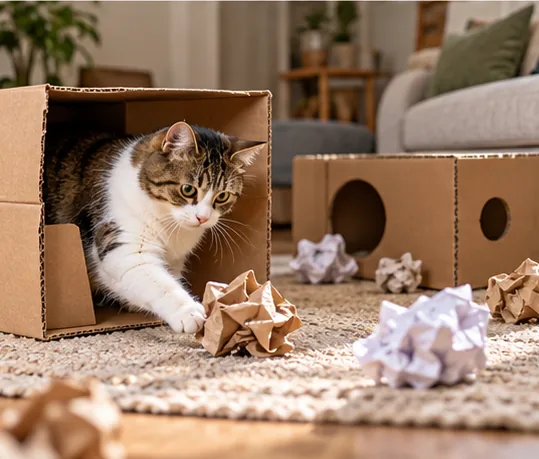
Remove tape, staples and packing materials before offering a box. AI-generated editorial illustration.
An open, clean box placed on its side becomes a hiding place or observation point. Remove staples, tape, packing straps, and plastic before offering it.
5. Create a short chase-and-pounce session
Use a wand toy while you supervise. Move it away from the cat in short bursts, pause so the cat can stalk it, and allow successful catches. Put the wand away afterward.
6. Provide a proper scratching surface
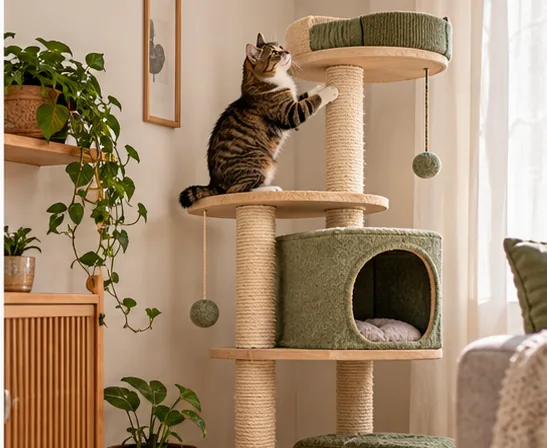
A stable scratcher supports normal scratching. The hanging pompom toys pictured are potential hazards if they fray, detach or entangle: keep unsuitable ones out of reach, particularly unsupervised. AI-generated editorial illustration.
Try a stable upright sisal post, a horizontal cardboard scratcher, or both. The Ohio State University Indoor Pet Initiative notes that cats’ preferences vary by location, orientation, and surface [2].
7. Add a second resting location
Place a washable bed in a calm corner and another in a higher, secure location if your cat can reach it safely. Choice matters; the most expensive bed is not necessarily the favorite.
8. Create a quiet hideaway
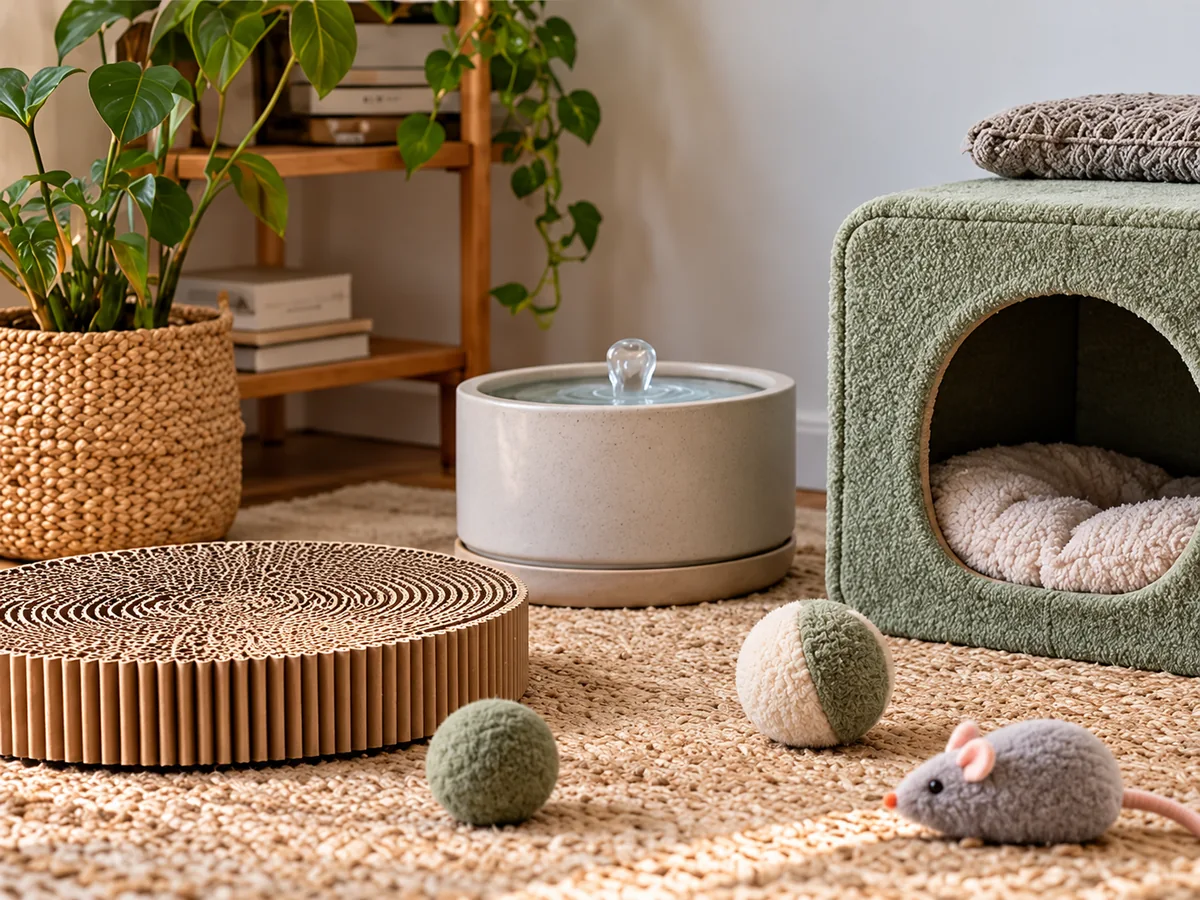
A quiet retreat and sturdy scratcher provide choice. The pictured plush toys have details that could detach; inspect for loose seams, tails and small pieces and remove damaged toys. AI-generated editorial illustration, not a toy safety test.
A covered cat bed, an open carrier with familiar bedding, or a sturdy box gives your cat a place to retreat without being disturbed.
9. Make a low obstacle path
Arrange sturdy cushions, a tunnel, and a few non-slip stepping spots. Keep jumps low for older cats or those with mobility difficulties, and avoid unstable stacks.
10. Hide a few pieces of regular food
For cats that enjoy foraging, place tiny portions of their normal meal in easy-to-find spots. Avoid areas near cleaners, cords, plants, or furniture gaps. Monitor intake so every portion is found and eaten.
11. Change the view, not the whole room
Move a stable cat bed between two favored areas or open access to another safe room. Small environmental changes can introduce new sights and smells without overwhelming the cat.
12. Use a cat tunnel
A collapsible tunnel can provide hiding and movement opportunities. Inspect seams, wires, and dangling attachments before and after use.
13. Teach a tiny cooperative trick
Practice a simple target-touch or carrier-entry exercise using positive reinforcement. Keep sessions brief and voluntary. Stop if the cat walks away.
14. Offer independent observation time
Not every enrichment activity has to involve you. A calm, accessible perch with a safe view may suit a cat that prefers watching to chasing.
15. End the day with predictable interaction
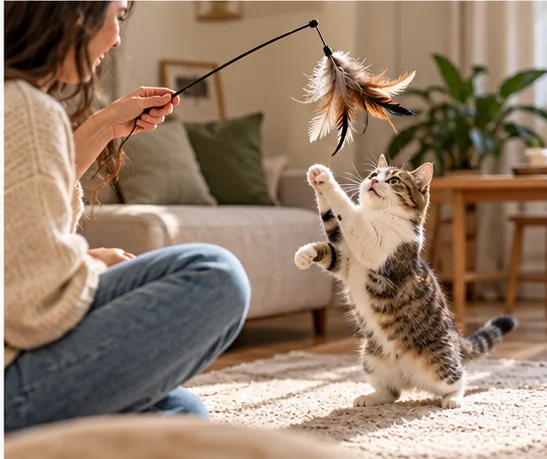
Wand toys require direct supervision and should be stored after play. AI-generated editorial illustration.
Use a short play session followed by the cat’s usual meal or settling routine. A predictable pattern is easier to maintain than an elaborate schedule that lasts only a week.
Adapt enrichment for senior cats and limited mobility
Older cats can still enjoy exploration and play, but the arrangement may need to change. Rather than relying on high jumps, provide a secure low resting place, non-slip routes, reachable food and water, and gentle toys that can be investigated from the floor. Cats Protection recommends adapting play and access to a senior cat’s mobility, with short sessions and steps or ramps where appropriate [4].
Offer easy puzzle feeders without restricting access to normal meals. Avoid expecting a cat with stiffness or reduced vision to navigate unfamiliar obstacles on its own. If reduced movement, reluctance to jump, or changed appetite is new, consult a veterinarian instead of treating it as boredom.
Build a routine that fits your cat
Choose one activity from three groups: movement (chasing or climbing), investigation (puzzles or boxes), and comfort (resting spots or hiding). A simple starting routine could be a short interactive play session before work, an inspected independent activity during the day, and another session when you return.
Do not force participation. If your cat ignores a puzzle or prefers a cardboard box to a costly device, that is useful information about what works for your cat.
When enrichment is not the whole answer
A sudden change in activity, appetite, grooming, litter-box behavior, or willingness to interact is not something to solve only with more toys. Contact your veterinarian for changes that are new, persistent, or concerning.
Frequently asked questions
How often should I rotate cat toys? There is no universal schedule. Try switching a few toys every several days and observe what brings interest back.
Are DIY toys safe? They can be, but safety depends on construction and the cat’s behavior. Avoid loose strings, rubber bands, detachable parts, and materials that can be eaten.
Do indoor cats need vertical space? Many benefit from stable elevated resting and observation places, but height and access should suit their mobility and confidence [3].
Explore related indoor-cat topics
- An Indoor Cat Play Routine You Can Actually Maintain
- DIY Cat Toys Using Things You Already Have
- How to Create a Cat-Friendly Apartment Without Renovating
Choose the next activity based on what your cat already does
You do not need to try all 15 ideas. Start with an observed preference and one low-risk change:
| Your cat already enjoys | Try first | Watch for |
|---|---|---|
| Looking outside | A secure resting spot by a fully closed or properly protected window | Unstable supports or access to an unsecured opening |
| Scratching | A stable scratcher in the location your cat already uses | Wobble, loose fibers or damaged covering |
| Hiding | A clean, open cardboard hideaway without tape or staples | Chewing or blocked exit routes |
| Stalking and chasing | A brief, directly supervised wand game | Chewing cords or loose components; store the toy afterward |
| Food exploration | A familiar, inspectable puzzle using part of the normal food allowance when suitable | Frustration, broken pieces or a diet that requires veterinary guidance |
After a few days, note whether the cat approached voluntarily, used the option repeatedly, or avoided it. Keep useful activities and stop those that cause fear or create chewing hazards. Sudden reductions in activity, appetite, or mobility should prompt veterinary advice rather than a more elaborate enrichment schedule.
Sources and further reading
- Cornell Feline Health Center, Safe toys and gifts: https://www.vet.cornell.edu/departments-centers-and-institutes/cornell-feline-health-center/health-information/feline-health-topics/safe-toys-and-gifts
- Ohio State University Indoor Pet Initiative, Scratching: https://indoorpet.osu.edu/node/449
- AAFP/ISFM, Feline Environmental Needs Guidelines: https://pmc.ncbi.nlm.nih.gov/articles/PMC11383066/
- Cats Protection, Elderly Cats: Care Guide for Older Cats: https://www.cats.org.uk/help-and-advice/caring-for-your-cat/elderly-cats
Editorial note: This article provides general environmental-enrichment information, not a diagnosis or individualized veterinary advice.
Illustration note: Images are original AI-generated editorial illustrations, not photographs of tested products or certified-safe installations. Follow the written safety guidance and manufacturer instructions rather than copying incidental visual details.
Keep exploring
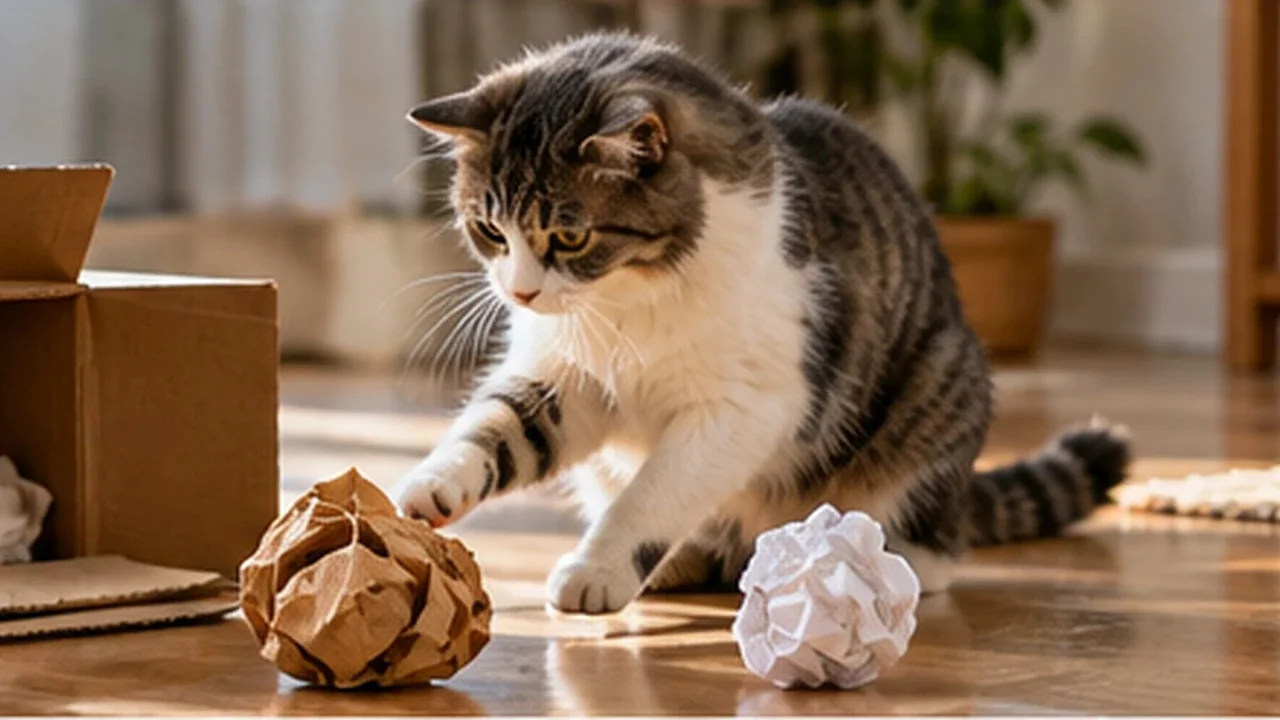
DIY Cat Toys Using Things You Already Have: A Safety-First Guide
Make simple cat enrichment activities with cardboard boxes and household items while avoiding unsafe strings, loose parts, and choking hazards.
Read the guide →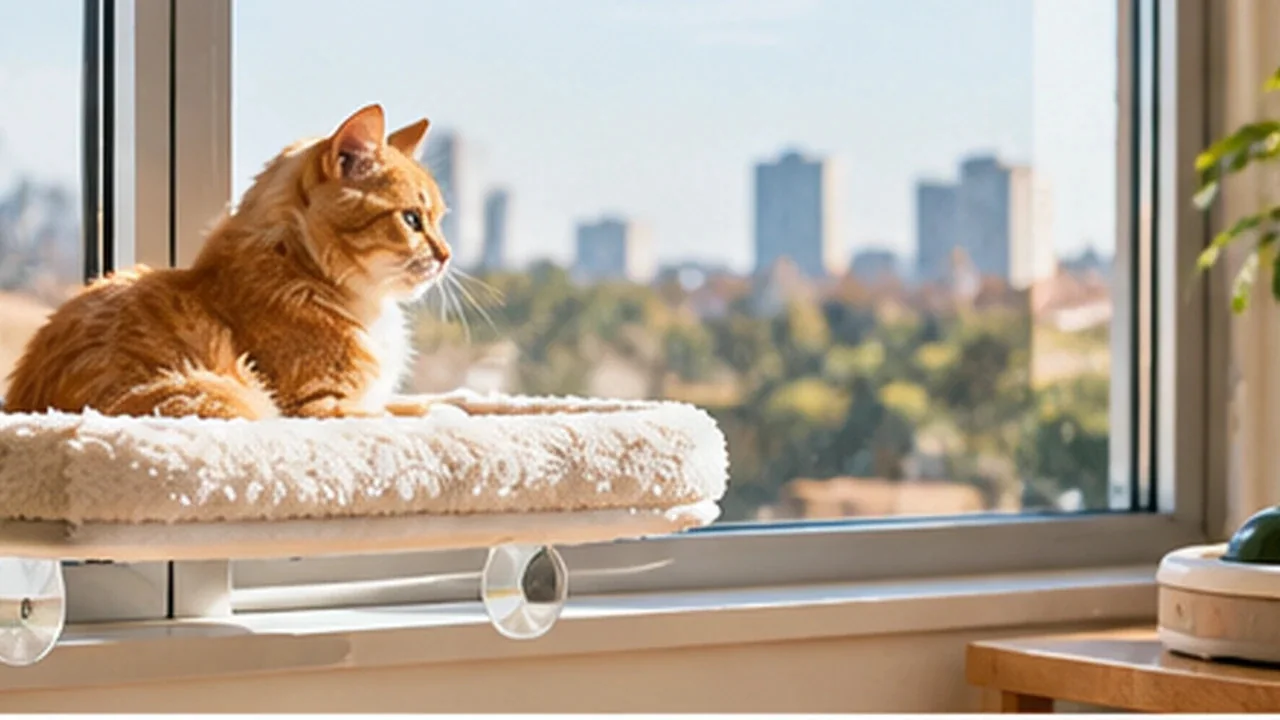
How to Keep Your Indoor Cat Entertained While You're at Work
Create a safer, more interesting day for your indoor cat while you're at work with a practical before-work checklist and low-maintenance activities.
Read the guide →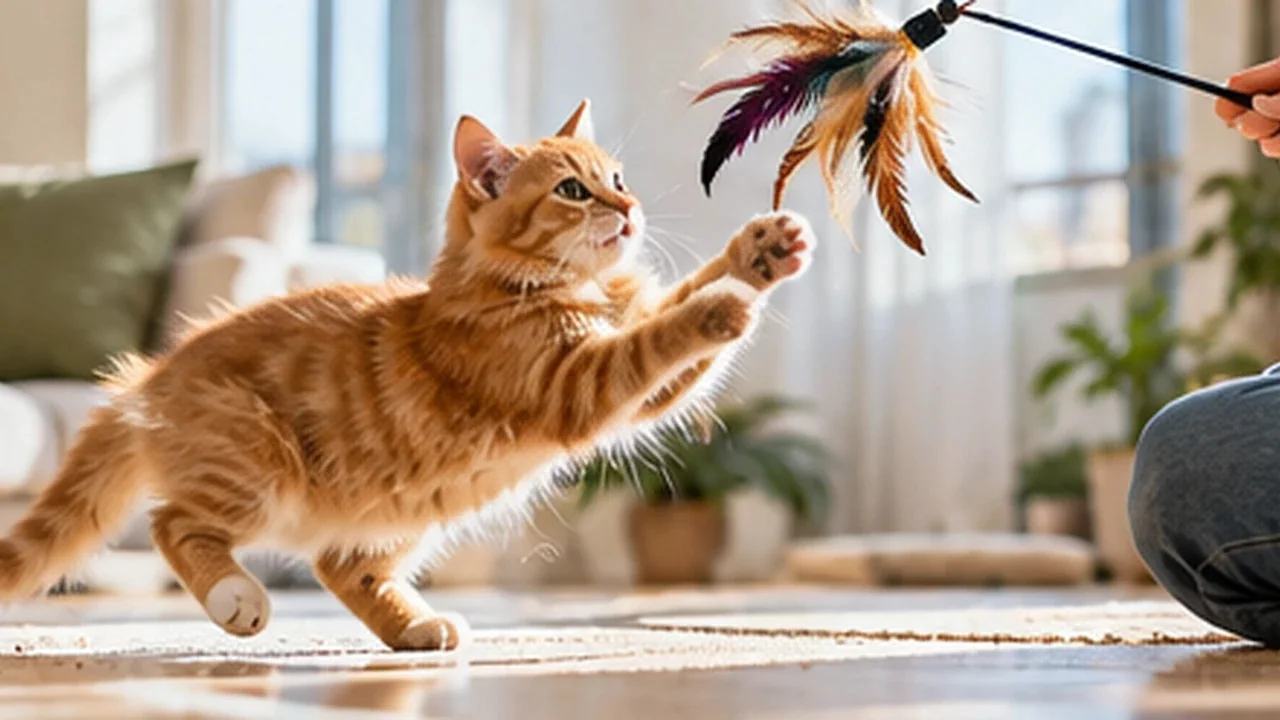
An Indoor Cat Play Routine You Can Actually Maintain
Build a simple indoor cat play routine with short supervised sessions, safe enrichment ideas, and a flexible seven-day example plan.
Read the guide →Cat behavior and needs vary. For sudden behavioral changes, health concerns, or individualized medical advice, speak with your veterinarian.
← Explore more guides