
All guides / Play & Enrichment
DIY Cat Toys Using Things You Already Have: A Safety-First Guide
At a glance
- Start with simple, clean materials and inspect every finished item.
- Remove staples, tape, string and small detachable pieces.
- Treat homemade activities as supervised trials, not automatically safe solo toys.
In this guide
- Your DIY safety checklist
- Idea 1: The simple cardboard hideout
- Idea 2: The paper-bag exploration tunnel
- Idea 3: A low cardboard obstacle course
- Idea 4: Supervised paper-ball chase
- Idea 5: Hide-and-find with a familiar toy
- Idea 6: DIY observation nook
- What we deliberately leave out
- How to tell if your cat enjoys the activity
- A stop-or-keep decision after each DIY session
- Frequently asked questions
- Related guides
- Sources and further reading
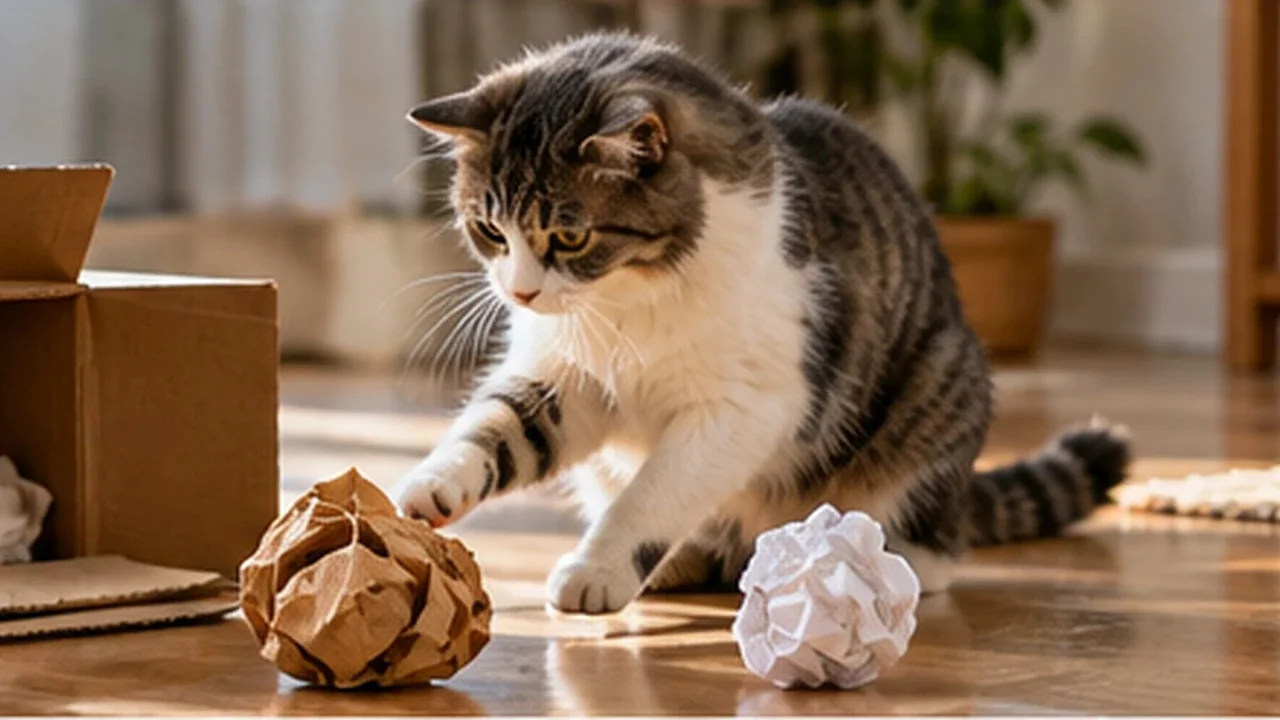
The best enrichment ideas are often surprisingly simple. A cardboard box can become a hiding place. A clean paper bag can be a tunnel. A few minutes of supervised movement with a homemade object can provide opportunities for chasing and exploration.
But “homemade” does not automatically mean “safe.” Cats may bite off pieces, swallow strands, or get stuck in small openings. Use these ideas as short supervised activities until you have verified that the materials and construction suit your cat.
Your DIY safety checklist
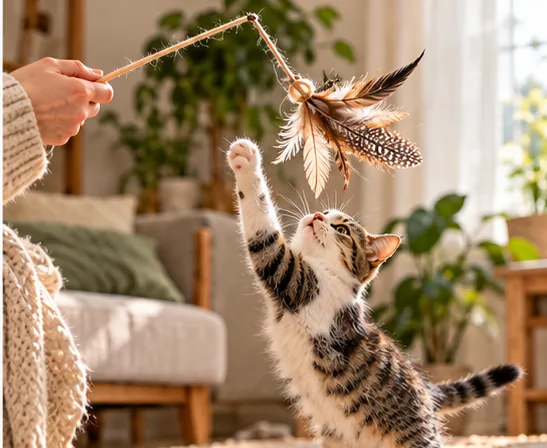
String and feather toys are for supervised interaction, not unattended play. AI-generated editorial illustration.
Before building anything, remove staples, tape, labels that peel into strips, loose glue, plastic film, string, ribbons, bag handles, and sharp edges. Do not use rubber bands, hair ties, yarn balls, or tiny detachable decorations. Cornell’s Feline Health Center warns that small parts and strand-like materials can be swallowed [1].
Use paper and cardboard that are clean, dry, and free of chemicals or food residue. Discard toys as soon as they become soggy, shredded into swallowable pieces, or otherwise damaged.
Idea 1: The simple cardboard hideout
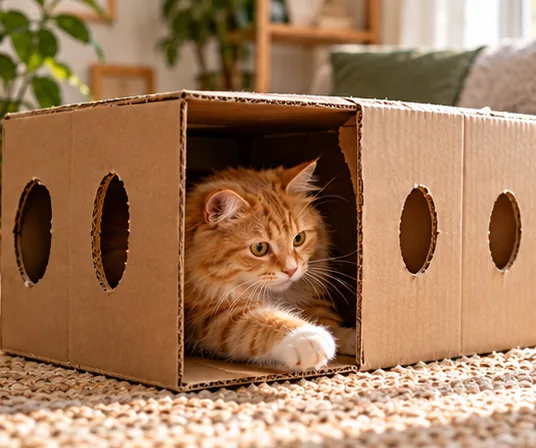
A clean box can serve as a simple temporary hiding place. AI-generated editorial illustration.
Materials: One clean, sturdy cardboard box large enough for your cat to enter and turn around.
How to make it: Remove all tape and staples. Open one side fully, set the box on a level floor, and add a familiar washable blanket if your cat prefers soft bedding. Avoid creating holes small enough to trap a head or paw.
Why it can work: Cats often appreciate the choice to retreat to a partly enclosed place. Safe hiding locations are part of the environmental-needs framework [2].
Idea 2: The paper-bag exploration tunnel
Materials: One large, clean paper grocery bag with all handles completely removed.
How to make it: Open the bag fully and lay it on its side on a clear floor. Supervise your cat’s first interactions. Discard the bag if it tears into pieces your cat mouths or tries to swallow.
Best for: Cats that like investigating new spaces. Avoid bags with coatings, plastic linings, or narrow openings.
Idea 3: A low cardboard obstacle course
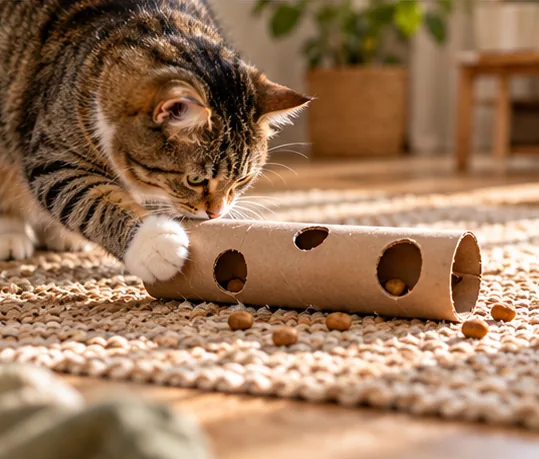
Inspect every cardboard edge and remove small detachable parts. AI-generated editorial illustration.
Materials: Two or three sturdy boxes of different sizes, plus a non-slip rug.
How to make it: Arrange them so the cat can walk around, step onto a low stable surface, and enter one open box. Keep everything at floor level or low height. There should be no risk of a stack tipping over.
Make it interesting: Change the arrangement once your cat has explored it. The goal is choice and movement, not a difficult athletic test.
Idea 4: Supervised paper-ball chase
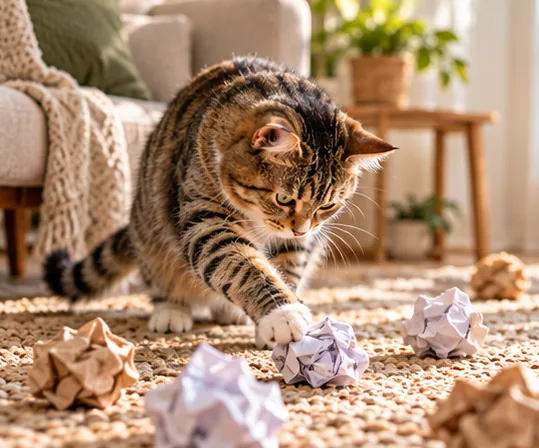
Use clean, appropriately sized paper pieces and supervise their use. AI-generated editorial illustration.
Materials: A single large, loosely crumpled piece of plain paper with no staples or tape.
How to use it: Roll or slide it on the floor while you watch. The ball must be too large for your cat to swallow whole and sturdy enough not to shed pieces. Remove it if the cat starts tearing or eating it.
Skip this activity for cats known to chew or ingest paper. Ask your veterinarian if you are concerned about non-food ingestion.
Idea 5: Hide-and-find with a familiar toy
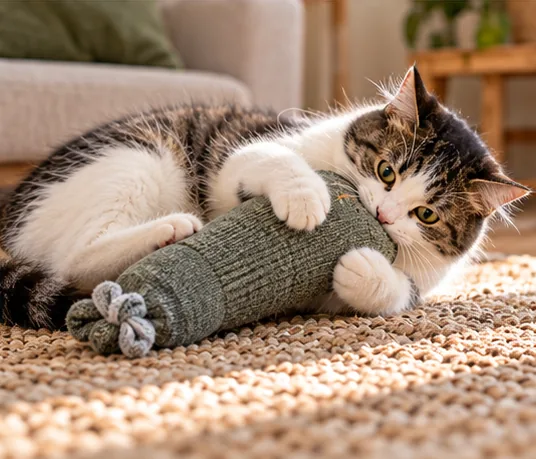
The illustrated fabric toy has a tied end that may fray. Supervise this activity and remove the toy if your cat chews off threads or pieces; never leave improvised fabric toys unattended. AI-generated editorial illustration, not a safety-tested toy.
Materials: One intact, cat-safe toy and a large open box.
How to use it: Place the toy partly behind the box and let your cat investigate. Move it slowly while supervising, then let your cat make a successful pounce. This changes the play environment without adding fragile craft materials.
Idea 6: DIY observation nook
Materials: A stable, low piece of existing furniture and a washable non-slip mat.
How to set it up: Choose a quiet spot with a pleasant view, make sure the furniture cannot tip, and keep the mat away from electrical cords and open windows. No cutting or construction is needed.
What we deliberately leave out
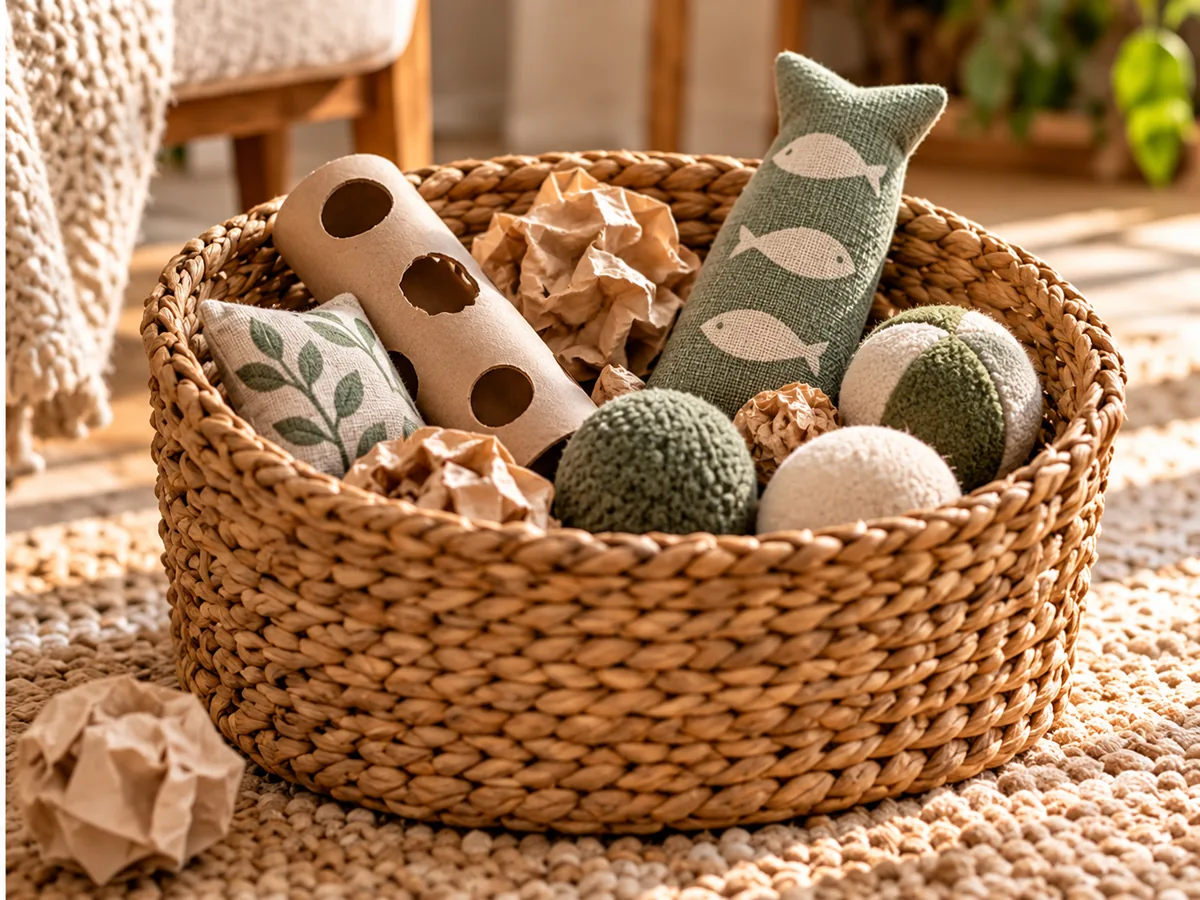
This open basket contains craft materials, not unattended cat toys. Store fabric, cardboard and paper out of reach when play ends; discard anything frayed or chewed. AI-generated editorial illustration.
You will see tutorials recommending toilet-paper rolls stuffed with treats, yarn pompoms, dangling ribbons, bottle caps, and toys glued to sticks. Some may be used under careful supervision in specific circumstances, but materials can vary and some create choking or ingestion risks. This guide avoids promoting them as universally safe DIY toys.
A cat that chews cardboard, fabric, or paper needs a different form of enrichment—often structured supervised play with suitable commercial toys rather than more chewable DIY objects.
How to tell if your cat enjoys the activity
A cat may approach slowly, investigate, bat, hide, walk away, or return later. Let your cat opt out. Some cats find novelty exciting; others need familiar bedding and a gradual introduction.
End a session if your cat looks frightened, becomes overwhelmed, or starts eating the materials. Put away temporary projects after play and tidy the area.
A stop-or-keep decision after each DIY session
Before reusing a homemade activity, check the material in good light. Discard it immediately if you find loose fibers, exposed adhesive, soggy cardboard, sharp edges, missing pieces, or evidence of chewing and swallowing. Avoid enclosing cats in boxes or bags that could trap them; use open escape routes and remove bag handles.
If the cat repeatedly bites off material, switch to a different supervised activity rather than making the same object sturdier with extra tape or glue. Keep a note of which simple activities your cat voluntarily enjoyed. A cardboard hiding box and a supervised chase session may be more useful than a complicated craft.
Possible ingestion is not a wait-and-see DIY problem. If you suspect your cat swallowed string, ribbon or another object, contact a veterinarian promptly. Do not pull any strand protruding from the mouth or rectum.
Frequently asked questions
Is a cardboard box a cat toy? It can serve as a hiding and exploration space. Check that it is clean, stable, and free from staples, tape, and unsafe holes.
Can I leave homemade toys out overnight? Only if you are confident there are no detachable or ingestible parts and the setup is safe for your cat. When uncertain, put it away.
What is the cheapest enrichment option? A clean cardboard box or a well-positioned resting spot may cost nothing and still add useful choice to a cat’s environment.
Related guides
- 15 Indoor Cat Enrichment Ideas
- How to Keep Your Cat Entertained While You’re at Work
- An Indoor Cat Play Routine
Sources and further reading
- Cornell Feline Health Center, Safe toys and gifts: https://www.vet.cornell.edu/departments-centers-and-institutes/cornell-feline-health-center/health-information/feline-health-topics/safe-toys-and-gifts
- AAFP/ISFM, Feline Environmental Needs Guidelines: https://pmc.ncbi.nlm.nih.gov/articles/PMC11383066/
Editorial note: Supervise unfamiliar DIY activities; this guide does not replace individualized veterinary advice.
Illustration note: Images are original AI-generated editorial illustrations, not photographs of tested products or certified-safe installations. Follow the written safety guidance and manufacturer instructions rather than copying incidental visual details.
Keep exploring
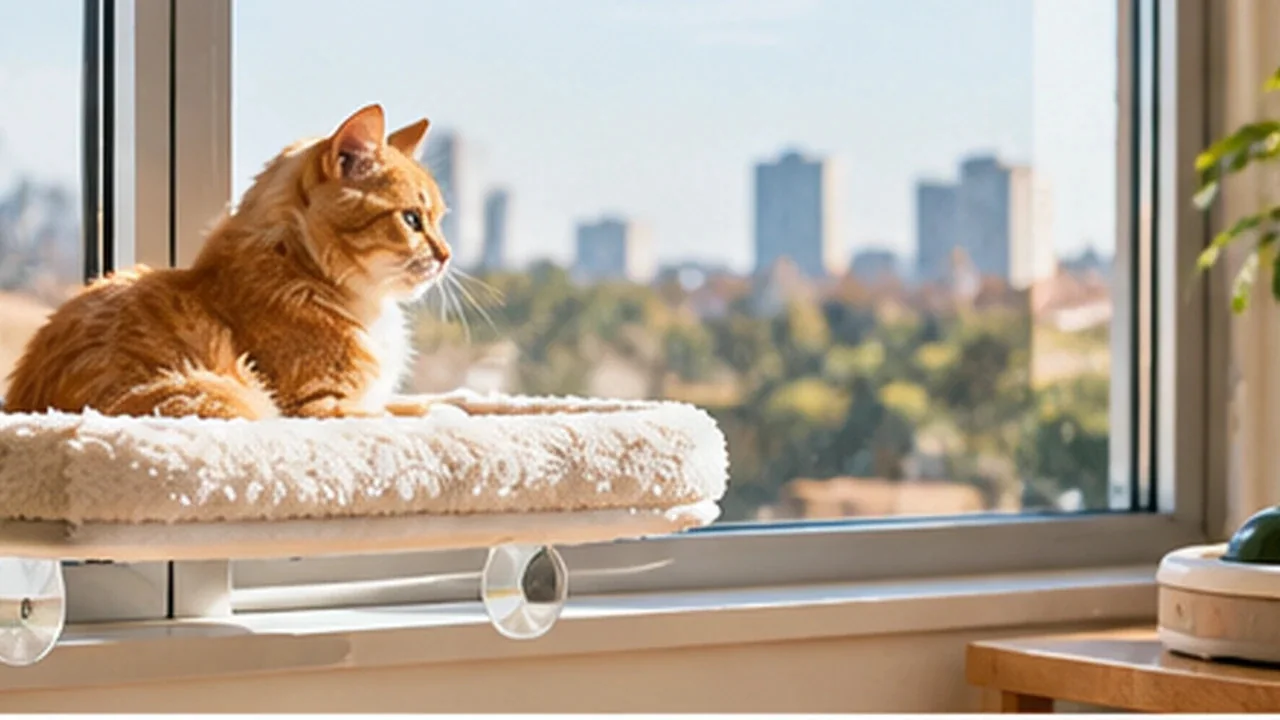
How to Keep Your Indoor Cat Entertained While You're at Work
Create a safer, more interesting day for your indoor cat while you're at work with a practical before-work checklist and low-maintenance activities.
Read the guide →
15 Indoor Cat Enrichment Ideas That Don't Require a Big Home
Try 15 practical indoor cat enrichment ideas, from puzzle feeders to safe climbing spaces, with tips for adapting activities to your cat.
Read the guide →
An Indoor Cat Play Routine You Can Actually Maintain
Build a simple indoor cat play routine with short supervised sessions, safe enrichment ideas, and a flexible seven-day example plan.
Read the guide →Cat behavior and needs vary. For sudden behavioral changes, health concerns, or individualized medical advice, speak with your veterinarian.
← Explore more guides