
All guides / Play & Enrichment
How to Keep Your Indoor Cat Entertained While You're at Work
At a glance
- Check access to essentials before adding entertainment.
- Choose inspected resting, scratching and observation options for time alone.
- Use your cat’s actual behavior to plan a routine around the hours you are home.
In this guide
- Start with the essentials, not entertainment
- Your 10-minute before-work checklist
- Five ways to make the day more interesting
- What not to leave out while you’re away
- When you get home
- How to tell whether your setup is working
- Before you leave: unattended versus supervised activities
- Frequently asked questions
- Related guides
- Sources and further reading
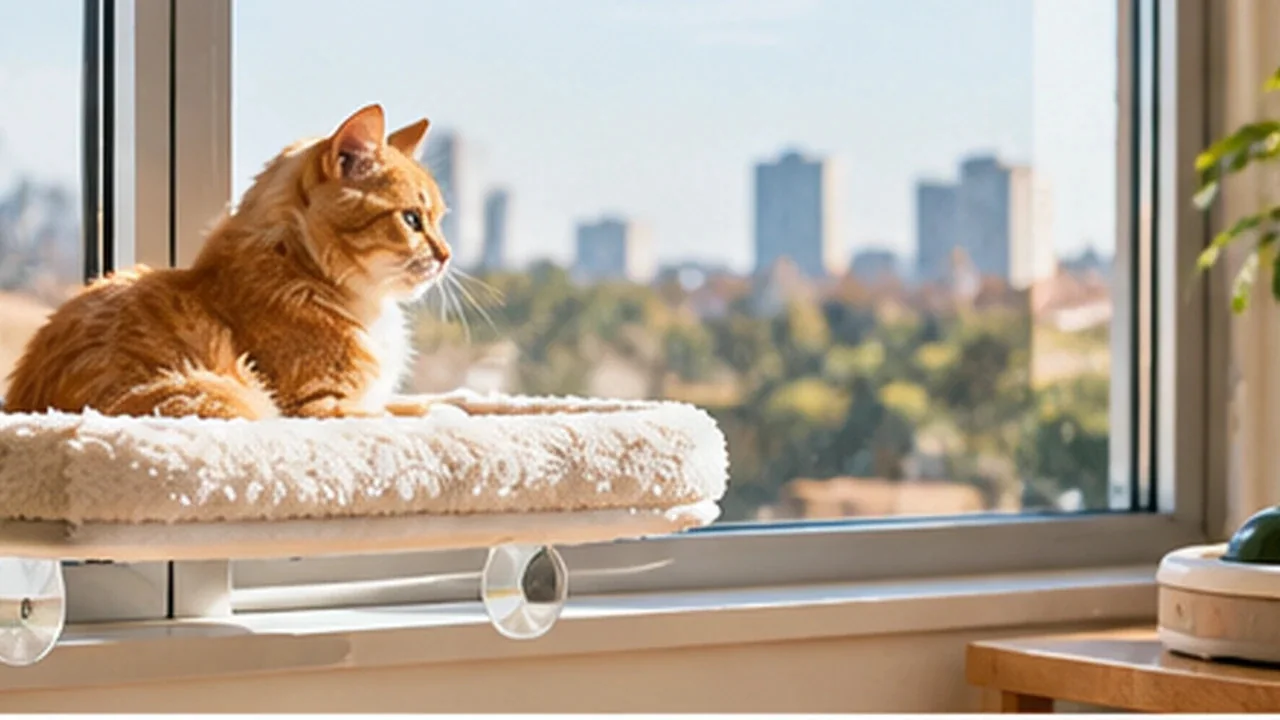
You do not have to turn your apartment into a pet amusement park before leaving for work. A cat-friendly day is built around access to essentials, places to rest, safe ways to observe the world, and opportunities for activity when you are home.
Some indoor cats sleep through much of the day; others enjoy exploring or watching the neighborhood. Rather than assuming your cat is lonely every time you leave, build a routine around behavior you have actually observed.
Important: Some illustrations show suspended toys and unidentified houseplants to help you recognize possible hazards. Do not leave such accessories accessible during an unattended period unless their safety for your specific cat is established; favor uncomplicated, inspected rest and scratching areas.
Start with the essentials, not entertainment
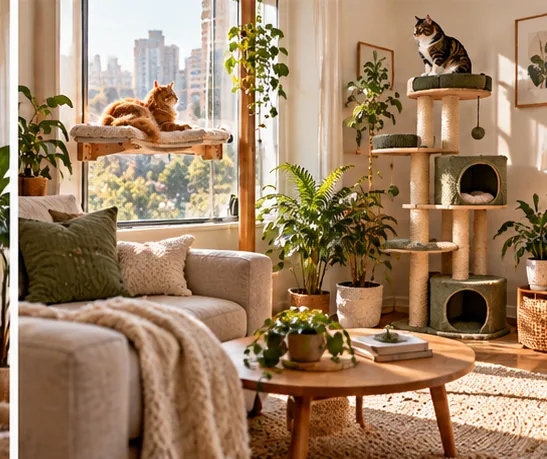
Caution: the illustrated cat tree includes a hanging toy and the houseplants are unidentified. This is not an approved unattended-room setup: check plant safety and remove or secure dangerous detachable items before leaving. AI-generated editorial illustration.
Before adding toys, check that your cat has reliable access to fresh water, the appropriate amount of food, a clean litter box, a comfortable resting place, and at least one retreat area. The AAFP/ISFM environmental guidelines recommend access to separated resources, safe places, and opportunities for play and predatory behavior [1].
A busy toy station does not compensate for a blocked litter box, a slippery climbing route, or an unreliable food routine.
Your 10-minute before-work checklist
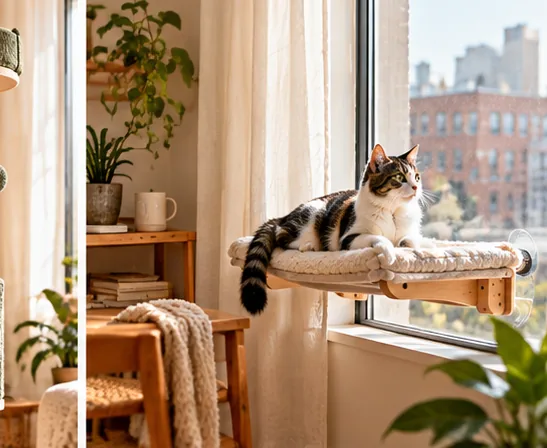
Secure windows and inspect elevated resting spots before you leave. AI-generated editorial illustration.
1. Check the environment. Close or secure windows and balcony access. The ASPCA warns that open or inadequately protected windows can lead to severe falls [2].
2. Remove unsafe toys. Store wand toys, ribbons, yarn, loose feathers, elastic, and damaged objects. Keep only toys that are appropriately sized, intact, and known to be safe for your particular cat when unsupervised [3].
3. Refresh water and litter. Keep bowls and litter areas accessible. In multi-cat homes, pay attention to whether one cat can block another’s access.
4. Offer a short interactive session. If your cat enjoys it, use a supervised chase-and-pounce game before leaving. Let the cat catch the toy occasionally rather than ending every chase in frustration.
5. Leave one quiet enrichment option. A secure window perch, sturdy scratcher, or familiar box may be a better unattended choice than a battery-powered toy with moving cords.
Five ways to make the day more interesting
A safe view to the outside
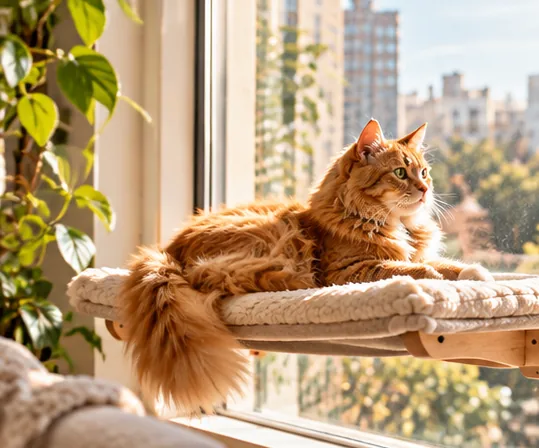
A secure viewing spot offers stimulation without constant play. AI-generated editorial illustration.
Set a stable bed or perch by a closed window. A view of birds, people, or moving leaves can offer visual variety. Ensure the perch is securely attached, has an appropriate weight capacity, and does not provide access to an unsafe opening.
Two different scratching options
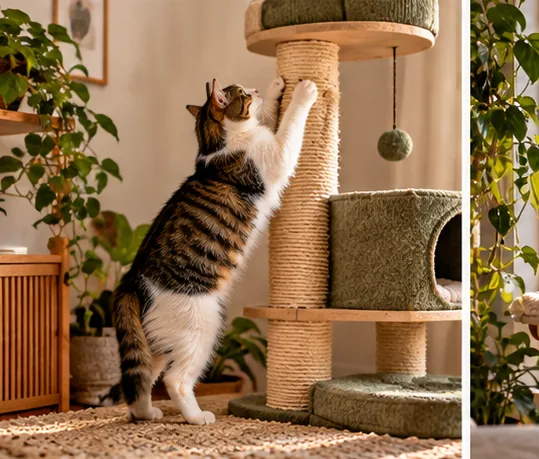
The illustrated post includes a dangling toy that may pose entanglement or ingestion risks. For an unattended room choose a stable scratcher without unsafe hanging attachments. AI-generated editorial illustration, not product safety advice.
If space allows, offer one sturdy vertical post and one horizontal scratcher. Position them where your cat actually spends time, not only where they look attractive to you. Scratching is normal feline behavior, not misbehavior [4].
A familiar hideaway
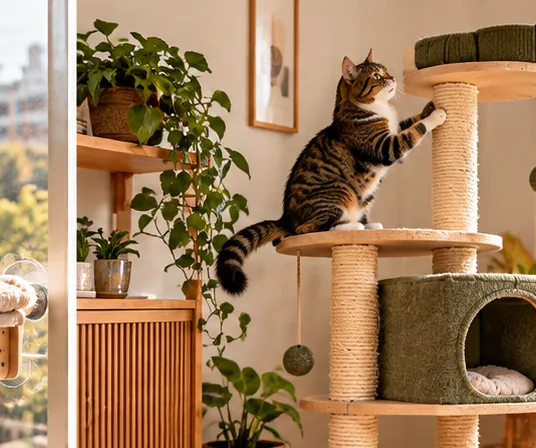
The suspended ball on this illustrated tree is not an endorsement for leaving dangling toys accessible while away. Check attachments and favor an uncomplicated, stable resting and scratching area. AI-generated editorial illustration.
Leave an open carrier with a blanket, an uncluttered space beneath furniture, or a clean box. Your cat should be able to retreat without being disturbed by people, dogs, or loud appliances.
A gradual food puzzle
A simple puzzle can turn part of the usual meal into a searching activity. Introduce it while you are home so you can check for frustration, parts that detach, or unusual chewing. Count all food toward the cat’s regular daily intake. Do not withhold needed meals to force a cat to use a puzzle.
An unobstructed route between essentials
Make it possible to move between resting, eating, drinking, and toileting spaces without crossing a chaotic obstacle course. This is particularly important when more than one cat lives in the home.
What not to leave out while you’re away
Avoid fishing-rod toys, string, ribbon, loose feathers, elastic bands, plastic bags, electrical cords within chewing reach, unstable towers, and DIY objects that shed pieces. If a toy’s safety depends on someone being there to intervene, it is not an unattended toy.
Do not leave open windows on the assumption that a screen will hold an excited or startled cat. A screen designed to exclude insects is not automatically fall protection.
Quick decision guide: what stays out?
| Environment or activity | While you are away |
|---|---|
| A securely positioned resting area beside a closed window | Generally suitable after checking stability and access |
| A stable scratcher, safe hideaway, or inspected soft resting mat | Often suitable if your cat uses it safely |
| A familiar, intact food puzzle | Consider only after supervised trials and without restricting normal food access |
| Feather wand, string, ribbon, loose elastic, or fragile DIY toy | Put it away when no adult can supervise |
| Elevated perch or cat tree that wobbles or has unsecured fixings | Do not leave accessible until corrected |
This is a screening guide, not a guarantee that an object is safe for every cat. Cornell warns that strand-like and detachable toy components may be swallowed [3]; the ASPCA warns about falls through unsecured windows [2]. Inspect your individual cat’s behavior and the manufacturer’s instructions before leaving equipment available.
When you get home
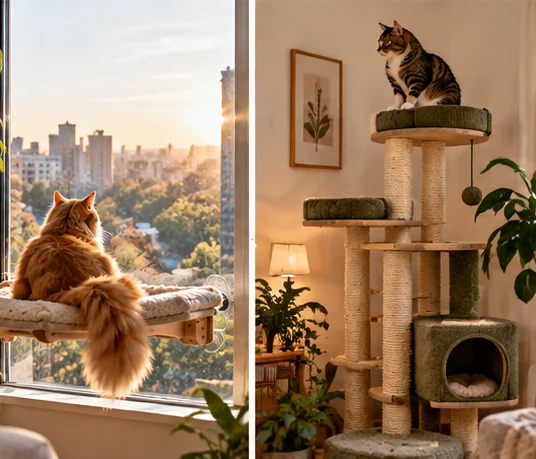
This scene depicts a dangling toy on the cat tree. Keep unsafe hanging or detachable accessories out of reach during absences; use the room’s calm resting spots rather than leaving interactive toys out. AI-generated editorial illustration.
Offer interaction rather than trying to make the entire day stimulating without you. Let your cat approach; some want a chase game, some prefer gentle petting, and others want quiet company.
A simple evening pattern might be: check food and water, scoop litter, play briefly if invited, and provide the usual meal. Consistency matters more than elaborate gadgets.
How to tell whether your setup is working
Look for continued use of resting and scratching areas, relaxed exploration, normal grooming, and willingness to interact. Keep notes if your cat begins hiding much more than usual, stops playing abruptly, changes eating habits, or starts eliminating outside the litter box. Those changes can have medical or environmental causes; contact your veterinarian rather than assuming boredom.
Before you leave: unattended versus supervised activities
Use a simple risk screen rather than treating every enrichment suggestion as something to leave out while you are gone.
| Usually suitable to consider after checking the setup | Keep for directly supervised sessions |
|---|---|
| A stable, familiar scratcher with no loose parts | Wand toys, yarn, ribbons, elastic and dangling strings |
| A securely installed resting area away from unsecured windows | New cardboard crafts or unfamiliar items your cat may chew |
| A familiar hiding place with clear entrance and exit | Toys with feathers, bells or detachable components |
| A previously assessed food puzzle that cannot trap or shed parts, if compatible with the cat’s diet | New feeding devices until you have observed their operation |
This is not a certification that any object is safe unattended. Inspect for wear, make sure the cat can reach food, water and litter independently, and remove any item that starts to fray, break or invite chewing. Do not use cameras or automatic feeders as substitutes for daily in-person care. If your cat has a medical diet or unusual eating behavior, discuss feeding changes with your veterinarian.
Frequently asked questions
Should I leave the television on for my cat? Some cats attend to moving images; others ignore them. It is optional and should not replace essentials or interaction.
Will a second cat keep my cat company? Not necessarily. Many cats prefer living without unrelated cats, and introductions can create stress. Consider the individual cat and available space [5].
Is an automatic feeder an enrichment activity? It may add predictability or be incorporated into a food routine, but it is not a substitute for play, safety checks, or human attention.
Related guides
Sources and further reading
- AAFP/ISFM, Feline Environmental Needs Guidelines: https://pmc.ncbi.nlm.nih.gov/articles/PMC11383066/
- ASPCA, High-Rise Syndrome: Lifesaving Tips for Cat Parents: https://www.aspca.org/news/high-rise-syndrome-lifesaving-tips-cat-parents
- Cornell Feline Health Center, Safe toys and gifts: https://www.vet.cornell.edu/departments-centers-and-institutes/cornell-feline-health-center/health-information/feline-health-topics/safe-toys-and-gifts
- Ohio State University Indoor Pet Initiative, Scratching: https://indoorpet.osu.edu/node/449
- Cats Protection, Getting Another Cat: https://www.cats.org.uk/help-and-advice/caring-for-your-cat/cats-and-your-family/other-cats
Editorial note: This article is general advice. For behavioral or health changes, consult a qualified veterinarian.
Illustration note: Images are original AI-generated editorial illustrations, not photographs of tested products or certified-safe installations. Follow the written safety guidance and manufacturer instructions rather than copying incidental visual details.
Keep exploring
DIY Cat Toys Using Things You Already Have: A Safety-First Guide
Make simple cat enrichment activities with cardboard boxes and household items while avoiding unsafe strings, loose parts, and choking hazards.
Read the guide →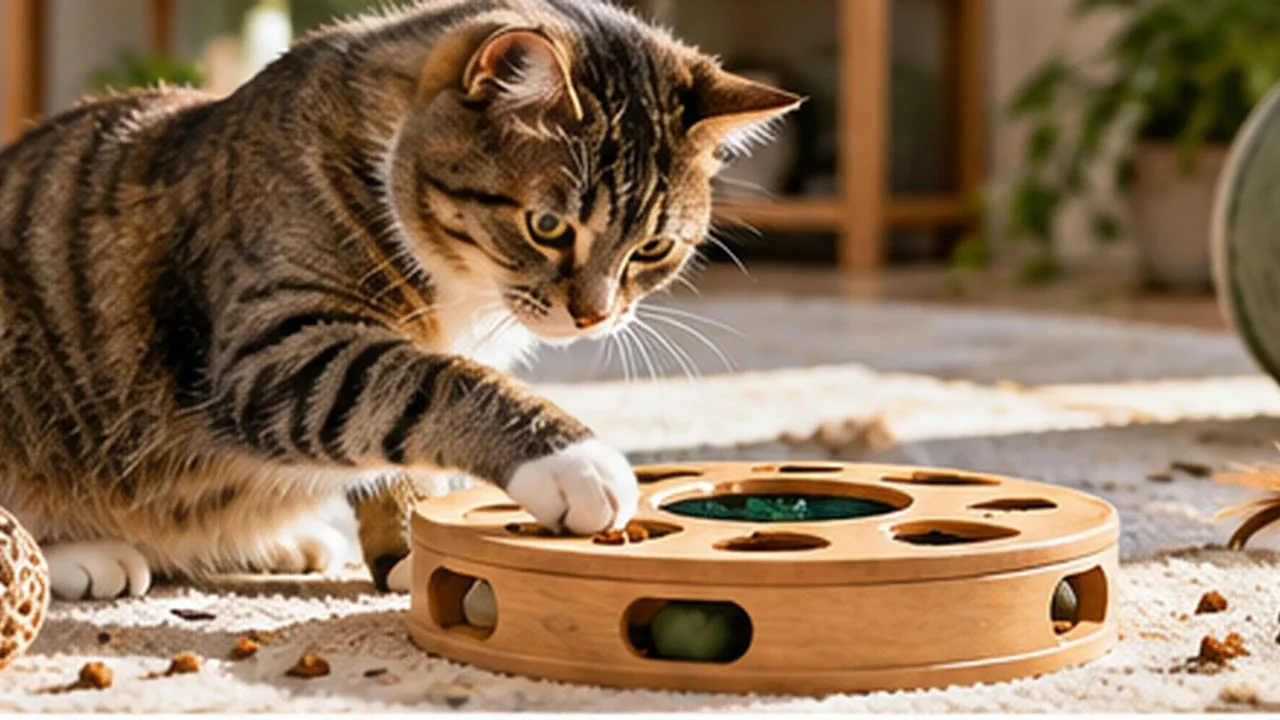
15 Indoor Cat Enrichment Ideas That Don't Require a Big Home
Try 15 practical indoor cat enrichment ideas, from puzzle feeders to safe climbing spaces, with tips for adapting activities to your cat.
Read the guide →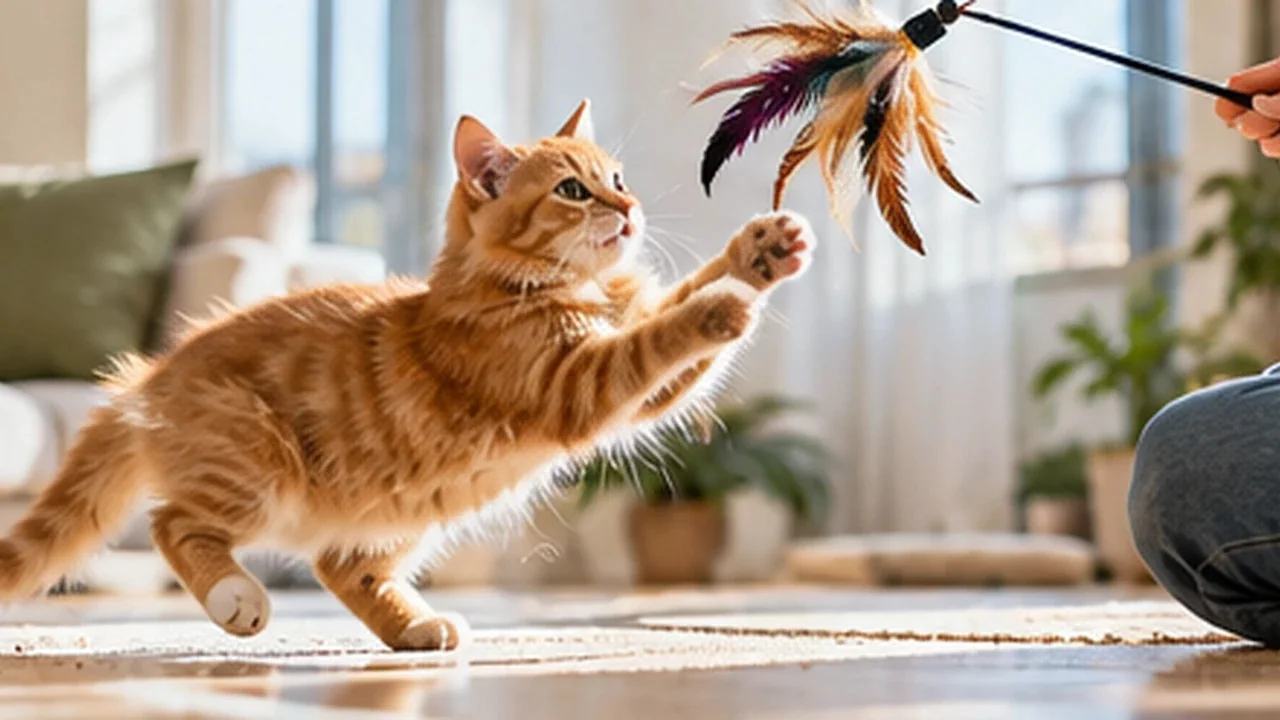
An Indoor Cat Play Routine You Can Actually Maintain
Build a simple indoor cat play routine with short supervised sessions, safe enrichment ideas, and a flexible seven-day example plan.
Read the guide →Cat behavior and needs vary. For sudden behavioral changes, health concerns, or individualized medical advice, speak with your veterinarian.
← Explore more guides