
All guides / Gear & Buying Guides
Window Perches vs. Cat Trees: Which Is Better for Your Indoor Cat?
At a glance
- Choose by the role you need: quiet observation or several activity options.
- Compare actual footprint, access, support and maintenance.
- Check window security, mounting instructions and accessory risks independently.
In this guide
- Quick comparison
- Choose a window perch if your cat loves watching outside
- Choose a cat tree if your cat needs several activities in one spot
- What if you have a small apartment?
- Match the purchase to the cat and the room
- Safety: the most important difference
- A no-regret decision process
- Frequently asked questions
- Related guides
- Sources and further reading
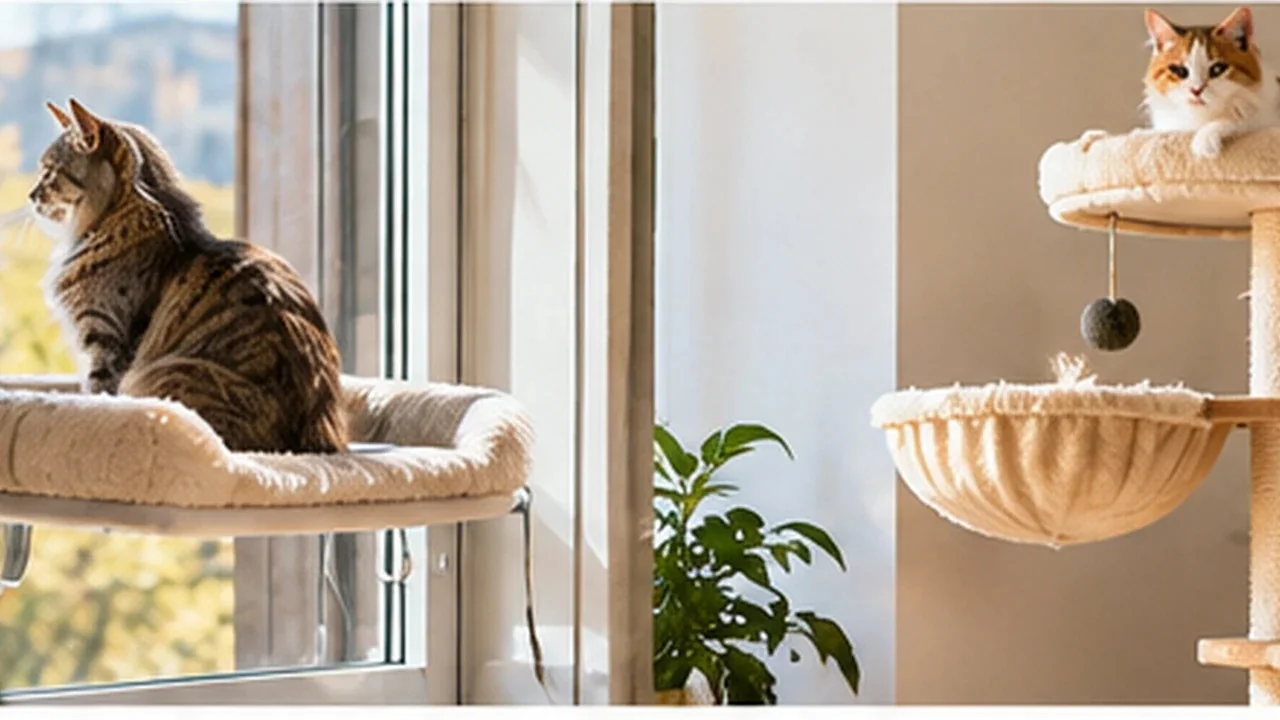
A window perch and a cat tree may both offer an elevated resting place, but they solve different problems. A window perch prioritizes an appealing view while using little floor space. A cat tree can combine perching, climbing, scratching, and hiding in a single piece of furniture.
The right choice depends less on a universal ranking and more on your cat’s habits, your available space, and whether you can install and maintain the product safely.
Quick comparison
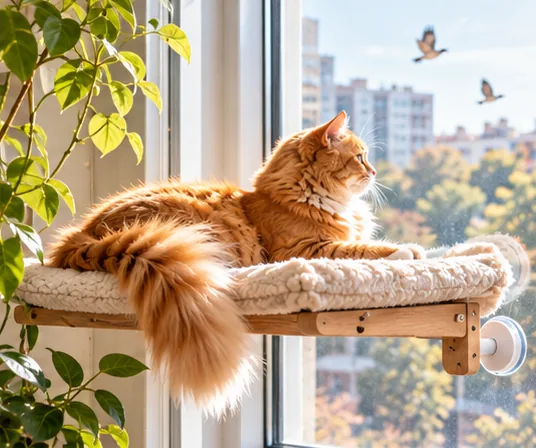
Window perches emphasize rest and outdoor observation. AI-generated editorial illustration.
| Feature | Window perch | Cat tree |
|---|---|---|
| Main purpose | Watching and resting | Climbing, resting, often scratching |
| Floor footprint | Usually small | Varies from compact to large |
| Installation | Depends on suction, brackets, sill, or mount | Often freestanding; some require anchoring |
| Scratching option | Usually separate scratcher needed | May include scratching posts |
| Good for | Cats drawn to a safe outside view | Cats wanting several levels or activities |
| Main safety question | Secure mounting and safe window | Stability, anchoring, safe access |
Choose a window perch if your cat loves watching outside
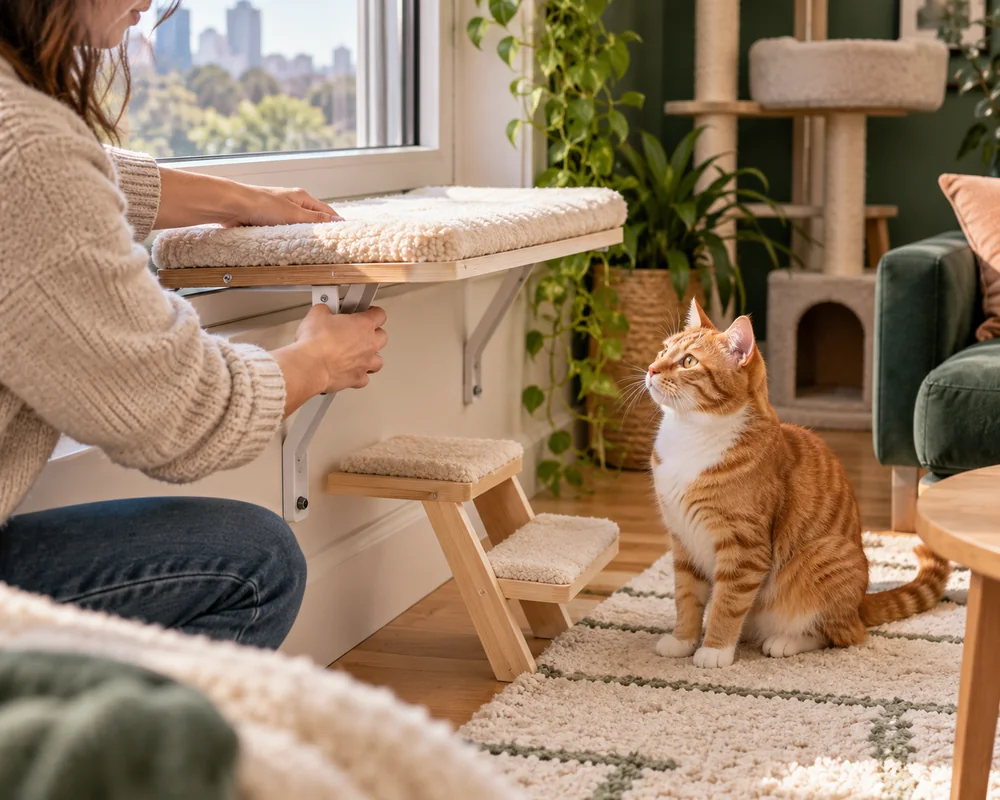
This scene shows a person checking a perch, but does not verify the bracket, fasteners, wall, window or weight limit. Use actual manufacturer installation requirements; never replicate the drawing as mounting instructions. AI-generated editorial illustration.
Many cats enjoy observing movement through a window. A perch can put a comfortable resting surface where your cat already chooses to sit. It is particularly useful in compact rooms where there is little spare floor space.
Check these details before buying: actual usable bed width and depth, the manufacturer’s maximum supported load, the specific mounting mechanism, window or wall surface compatibility, washing instructions, and replacement components.
Do not assume that suction cups work on every window or remain secure indefinitely. Follow the manufacturer inspection schedule and recheck stability after cleaning or temperature changes. If a perch slips or tilts, stop using it.
Choose a cat tree if your cat needs several activities in one spot
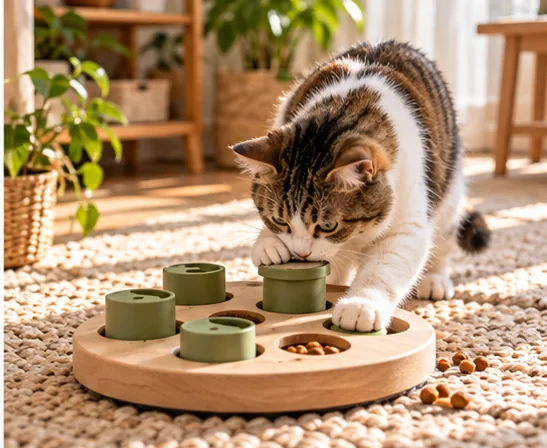
A tree is only one enrichment component; some cats also enjoy puzzle activities. AI-generated editorial illustration.
A cat tree can include multiple resting levels, scratchable surfaces, and hiding places. It may offer more of the choices described in the AAFP/ISFM environmental-needs guidelines [1].
A cat tree is not necessarily the better option in every home. Tall, narrow units need particular attention to stability, while complex designs can be difficult for kittens, senior cats, or cats with mobility limitations.
Check the footprint, base width, anchoring instructions, platform measurements, access gaps, covering materials, and replacement parts before you buy.
What if you have a small apartment?

A compact scratcher, closed storage and a quiet resting spot are separate functions. User-supplied editorial illustration; inspect and secure real installations. Open full-size illustration
Think about what you already own. If there is a suitable scratcher and hiding spot, an appropriately installed window perch may add the missing viewing feature without occupying floor space. If your cat has no comfortable vertical resting option and scratches furniture, a well-chosen cat tree might provide more functions per square foot.
There is no requirement to own both. Your cat’s use of the space matters more than the number of accessories.
Match the purchase to the cat and the room
Instead of starting with a brand or a top-ten list, compare your actual constraints. These are practical screening questions, not product ratings or guarantees of safety.
| Situation | Start by comparing | Avoid assuming |
|---|---|---|
| Very limited floor space | A sill-mounted perch or a compact tree with a measured footprint | Every window can support a perch |
| Cat that enjoys scratching | A stable tree with an appropriate scratching surface, or a separate scratcher beside a perch | A window perch replaces scratching opportunities |
| Older cat or limited mobility | Lower, broad resting platforms and reachable steps | More height automatically means more enrichment |
| Heavy or large-framed cat | Usable platform dimensions, manufacturer load guidance, fasteners and installation compatibility | A photographed cat of similar size proves suitability |
| Rental home with no drilling permitted | Freestanding, properly stable furniture or a no-drill solution expressly approved for the surface | A suction mount will be compatible with any pane |
Before checkout: Measure the usable resting surface rather than the product’s outside dimensions. Record your cat’s current weight, then check the manufacturer’s stated limits and installation instructions. Confirm whether the unit needs drilling or anchoring, whether your specific window or wall is compatible, and whether replacement covers or mount components are available. If the seller cannot provide essential load or mounting information, do not treat attractive photos or review averages as a substitute.
After installation: Test the empty unit exactly as the manufacturer instructs before inviting your cat to use it. Observe the first uses, check for shifting or wobbling, and inspect fittings after cleaning or moving the furniture. Do not place a perch beside an open or unsecured window. A cat should always be able to choose another safe resting place.
Safety: the most important difference
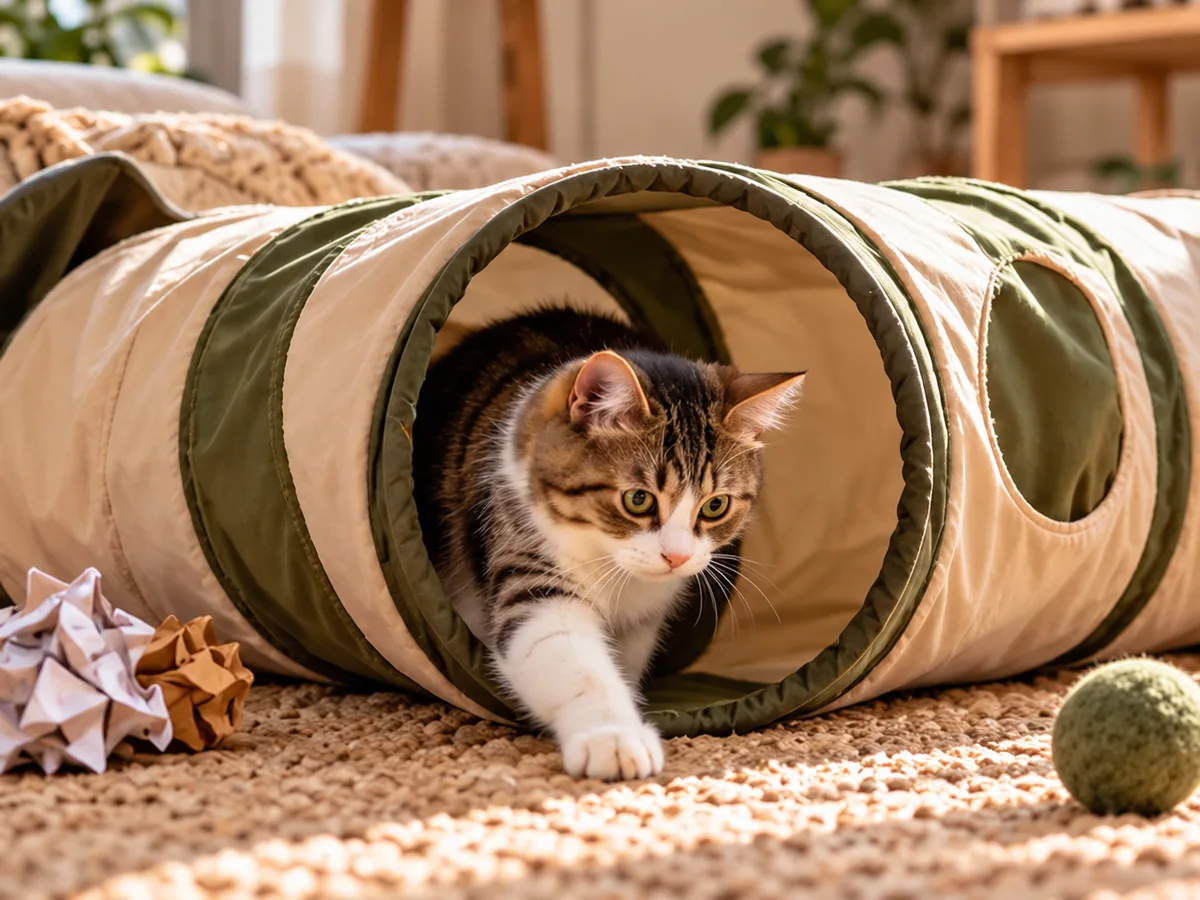
Prefer inspected, low tunnels without detachable dangling toys; remove them if seams or materials become damaged. AI-generated editorial illustration.
Window safety: The ASPCA warns that cats can be seriously injured by falls through open windows and from elevated outdoor spaces [2]. A perch is not a reason to leave a window open, and an insect screen alone may not be a sufficient barrier.
Tree safety: Freestanding furniture must be stable during jumping and climbing. Assemble it as directed, use any required anchors, and check fasteners and materials regularly. Do not install wall shelves into unsuitable surfaces.
Mobility: If your cat is older, injured, or reluctant to jump, choose a reachable option with safe steps and ask your veterinarian about appropriate activity levels when needed.
A no-regret decision process
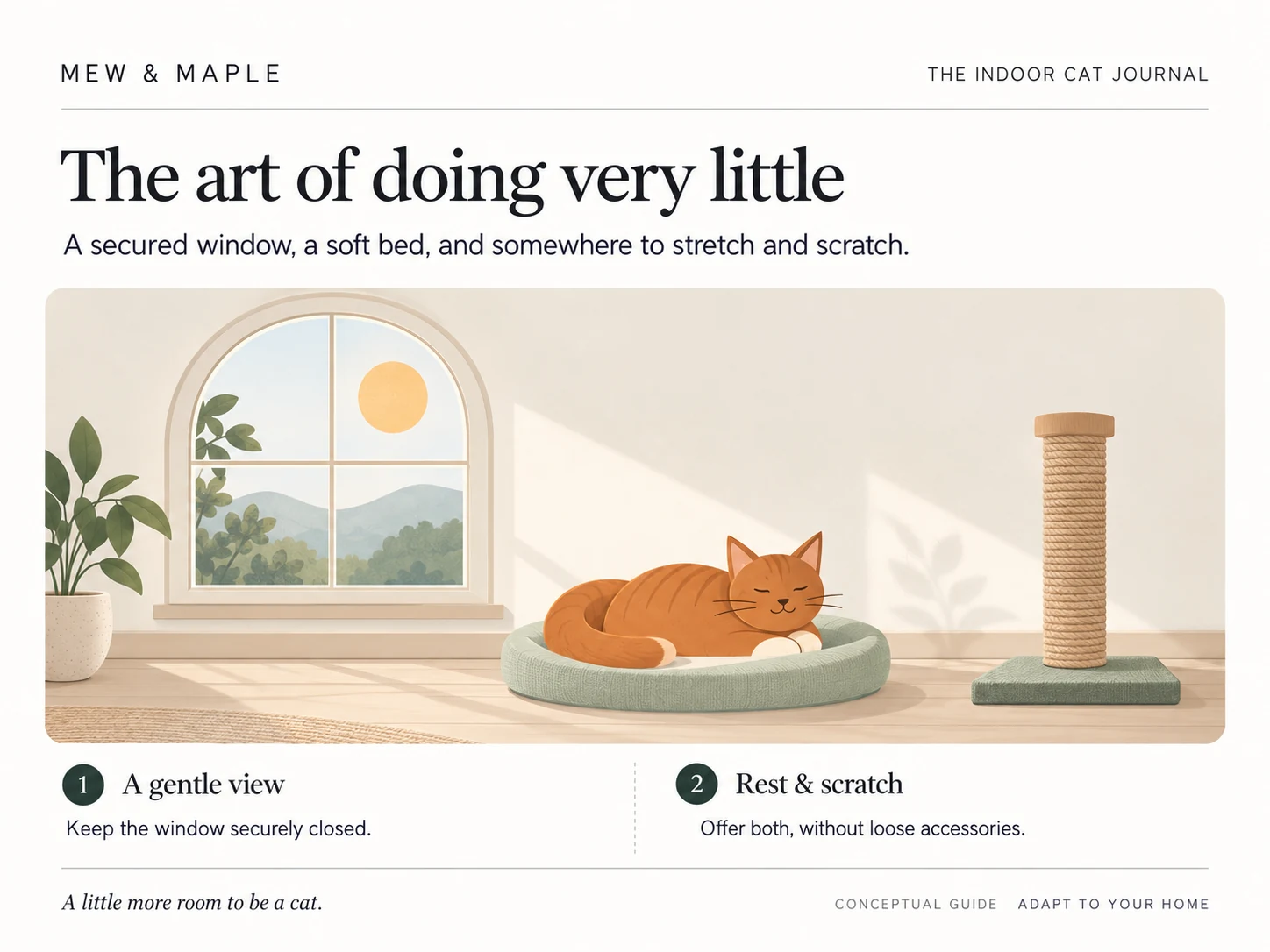
A quiet rest area and an inspected scratching option can complement a safe view. User-supplied editorial illustration, not installation certification. Open full-size illustration
- Observe whether your cat prefers looking outside, climbing, scratching, or hiding.
- Measure the space and the platform your cat would actually lie on.
- Check installation requirements and declared load limits.
- Choose cleanable materials and inspect for detachable hazards.
- Start with one item and assess whether your cat voluntarily uses it.
A high price or dramatic photo is not evidence that a product is safe or suitable. If specifications are missing, treat that as a reason to be cautious.
Frequently asked questions
Do suction-cup perches damage windows? Installation compatibility depends on the product and surface. Follow the specific manufacturer’s instructions and inspect frequently; do not make universal assumptions.
Will a cat tree reduce furniture scratching? A well-placed, preferred scratching surface may help redirect scratching, but results vary. Ohio State’s guidance recommends matching the post orientation and location to the cat [3].
Are window perches safe for large cats? Only use products whose stated load capacity, mounting method, and platform dimensions suit the individual cat, and check them regularly.
Related guides
- Cat Trees for Small Apartments
- How to Create a Cat-Friendly Apartment
- How to Keep Your Cat Entertained While You’re at Work
Sources and further reading
- AAFP/ISFM, Feline Environmental Needs Guidelines: https://pmc.ncbi.nlm.nih.gov/articles/PMC11383066/
- ASPCA, High-Rise Syndrome: https://www.aspca.org/news/high-rise-syndrome-lifesaving-tips-cat-parents
- Ohio State University Indoor Pet Initiative, Scratching: https://indoorpet.osu.edu/node/449
Editorial and affiliate disclosure: This feature comparison is not a test of specific products. Add recommendations only after specifications and affiliate claims are verified.
Illustration note: Images are original AI-generated editorial illustrations, not photographs of tested products or certified-safe installations. Follow the written safety guidance and manufacturer instructions rather than copying incidental visual details.
Keep exploring
Best Cat Trees for Small Apartments: What to Look For Before You Buy
Find a cat tree that fits a small apartment. Compare footprints, stability, perch size, access, scratching surfaces, and cleaning needs.
Read the guide →
How to Create a Cat-Friendly Apartment Without Renovating
Make your apartment more cat-friendly with safe hiding places, scratching areas, vertical space, and a room-by-room checklist.
Read the guide →
DIY Cat Toys Using Things You Already Have: A Safety-First Guide
Make simple cat enrichment activities with cardboard boxes and household items while avoiding unsafe strings, loose parts, and choking hazards.
Read the guide →Cat behavior and needs vary. For sudden behavioral changes, health concerns, or individualized medical advice, speak with your veterinarian.
← Explore more guides