
All guides / Play & Enrichment
An Indoor Cat Play Routine You Can Actually Maintain
At a glance
- Choose a repeatable routine that fits your cat and your day.
- Offer chances to stalk, chase and catch without forcing participation.
- Adjust to mobility and interest; the example week is not an exercise prescription.
In this guide
- What a good play session looks like
- A simple daily framework
- A flexible seven-day activity plan
- Adjust the routine to your cat’s personality
- How to avoid common mistakes
- Track enjoyment without turning your cat into a project
- A realistic routine for unpredictable days
- Frequently asked questions
- Related guides
- Sources and further reading
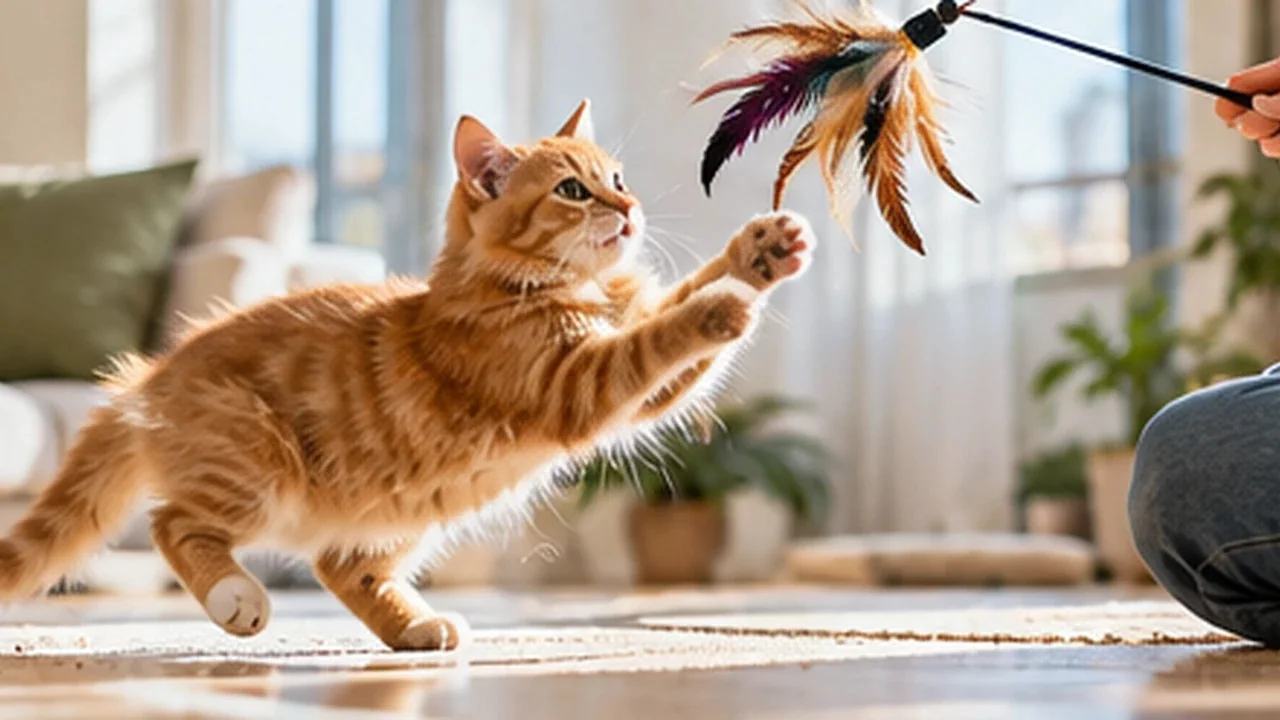
The perfect play schedule is the one you and your cat can repeat without turning it into a chore. A predictable rhythm of short, enjoyable opportunities is often more realistic than buying new toys every week or expecting a cat to exercise on command.
This guide is a flexible planning tool, not a prescribed exercise program. Cats differ by age, health, confidence, and preferred play style. Start small, watch your cat, and adapt the schedule rather than forcing an exact number of minutes.
What a good play session looks like
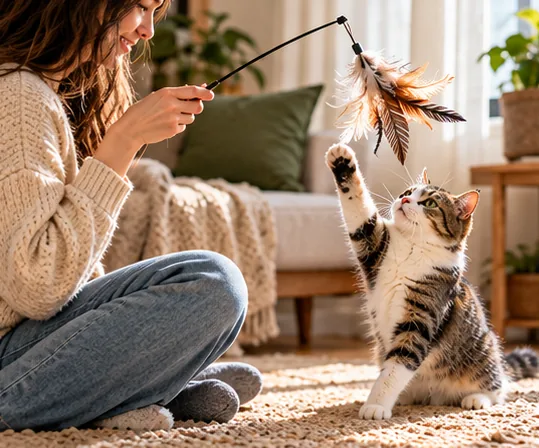
Interactive wand play should be supervised and end with the toy put away. AI-generated editorial illustration.
Many cats respond to a pattern that resembles hunting: notice movement, approach, stalk, chase, pounce, and catch. Use a suitable toy to move unpredictably but within reach. Give the cat opportunities to succeed, not a frustrating chase that never ends.
The 2013 AAFP/ISFM environmental guidelines emphasize opportunities for play and predatory behavior, along with positive, predictable interactions [1]. Separately, Cornell’s Feline Health Center advises avoiding toys with small, detachable, or strand-like parts that could be ingested [2]; do not leave wand toys or loose strings accessible between supervised play sessions.
A simple daily framework
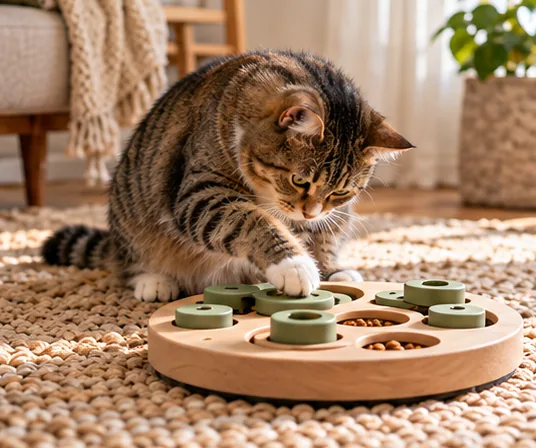
A familiar food puzzle can complement supervised play. AI-generated editorial illustration.
Before your workday: Offer a brief, calm play opportunity if your cat is interested. A few engaged minutes are more useful than leaving a wand dangling unattended.
During the day: Make basic resources accessible and leave a suitable independent activity, such as a secure window view or a familiar scratcher. Introduce any food puzzle while you are home first.
In the evening: Try another interactive session, allow the cat to finish with a successful catch, and return to the normal meal or relaxation routine.
There is no universal time quota that fits every cat. If your cat is panting, limping, distressed, or unwilling to participate, stop and seek veterinary advice when warranted.
Short sessions still count
Do not force a fixed 10- or 20-minute block if your cat loses interest sooner. Cats Protection notes that even one- to two-minute games can be worthwhile and that play frequency varies by age and individual preference [3]. Let the cat choose whether to join in; use gentle floor-level play for an older cat, and stop if the cat seems distressed.
Keep caregiver-controlled wand play separate from toys that remain available unsupervised. Check for worn parts and store anything with string or loose feathers after the session [2][3].
A flexible seven-day activity plan
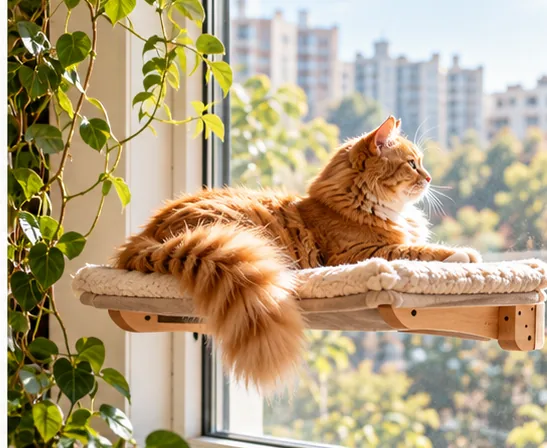
Observation and rest are also part of a balanced day. AI-generated editorial illustration.
| Day | Main activity | Optional environmental activity |
|---|---|---|
| Monday | Supervised chase-and-pounce play | Refresh a safe window resting spot |
| Tuesday | Short toy-hunt game | Rotate one intact toy |
| Wednesday | Gentle low-level movement | Offer a clean cardboard hideaway |
| Thursday | Supervised interactive play | Check and refresh scratchers |
| Friday | Repeat the cat’s favorite game | Inspect a food puzzle and offer part of a meal |
| Saturday | Explore a stable low obstacle path | Wash a favorite bed cover |
| Sunday | Easy play or restful interaction | Review what your cat actually used |
Treat this as a menu rather than an obligation. If your cat is older or has a health concern, modify activities with your veterinary team’s guidance.
Adjust the routine to your cat’s personality
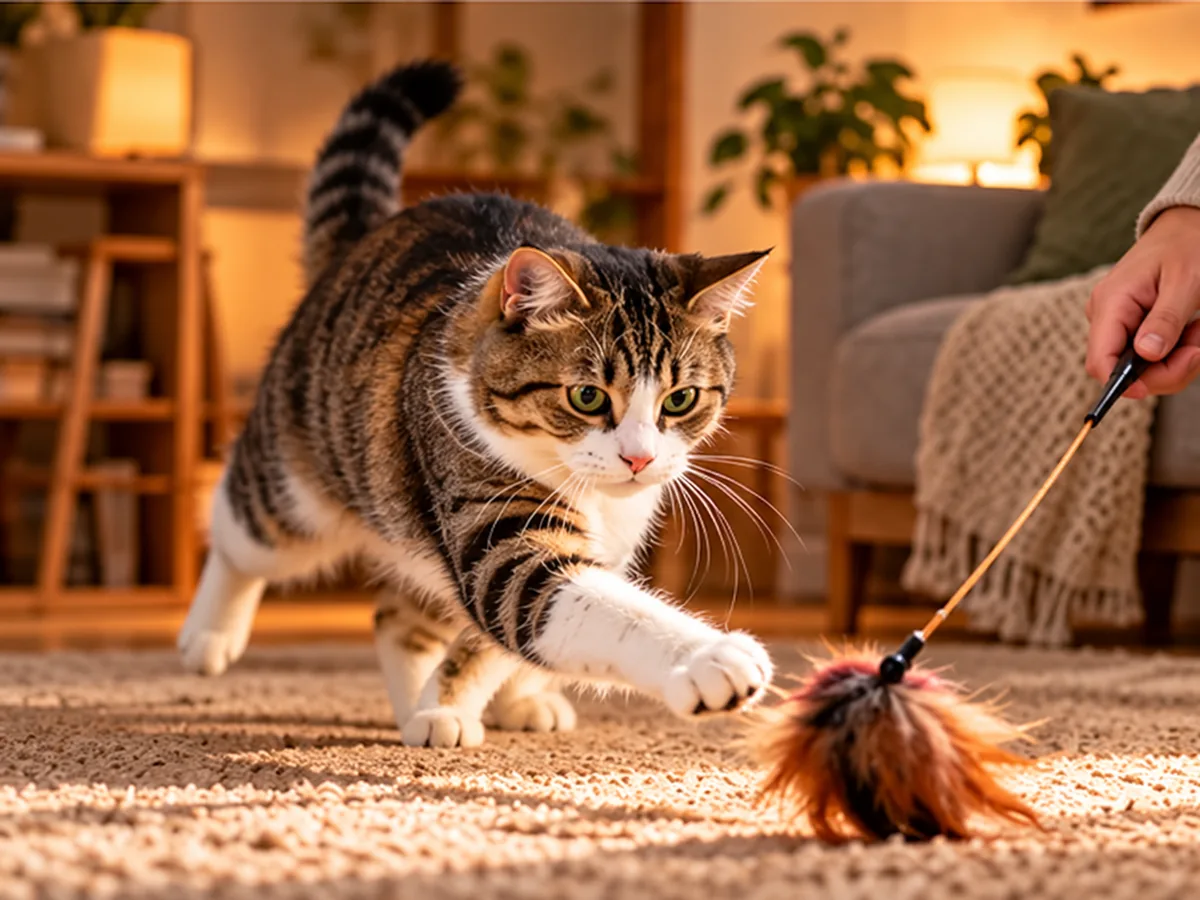
This illustrated game includes a supervising adult; allow catches, stop if your cat seems uncomfortable and put the lure away afterward. AI-generated editorial illustration.
For a curious explorer: Rotate observation spots, introduce a safe cardboard box, or use a simple food puzzle.
For an enthusiastic chaser: Offer controlled wand play, with short pauses and successful catches. Put loose-part toys away afterward.
For a cautious cat: Begin with familiar surroundings and tiny changes. Allow the cat to approach a new object voluntarily.
For a senior cat: Keep movement comfortable and access easy. Low-level reach-and-bat activities may be more suitable than big jumps, subject to veterinary advice.
For multiple cats: Offer individual play opportunities as well as shared access to separated resources; competition can make play stressful [1].
How to avoid common mistakes
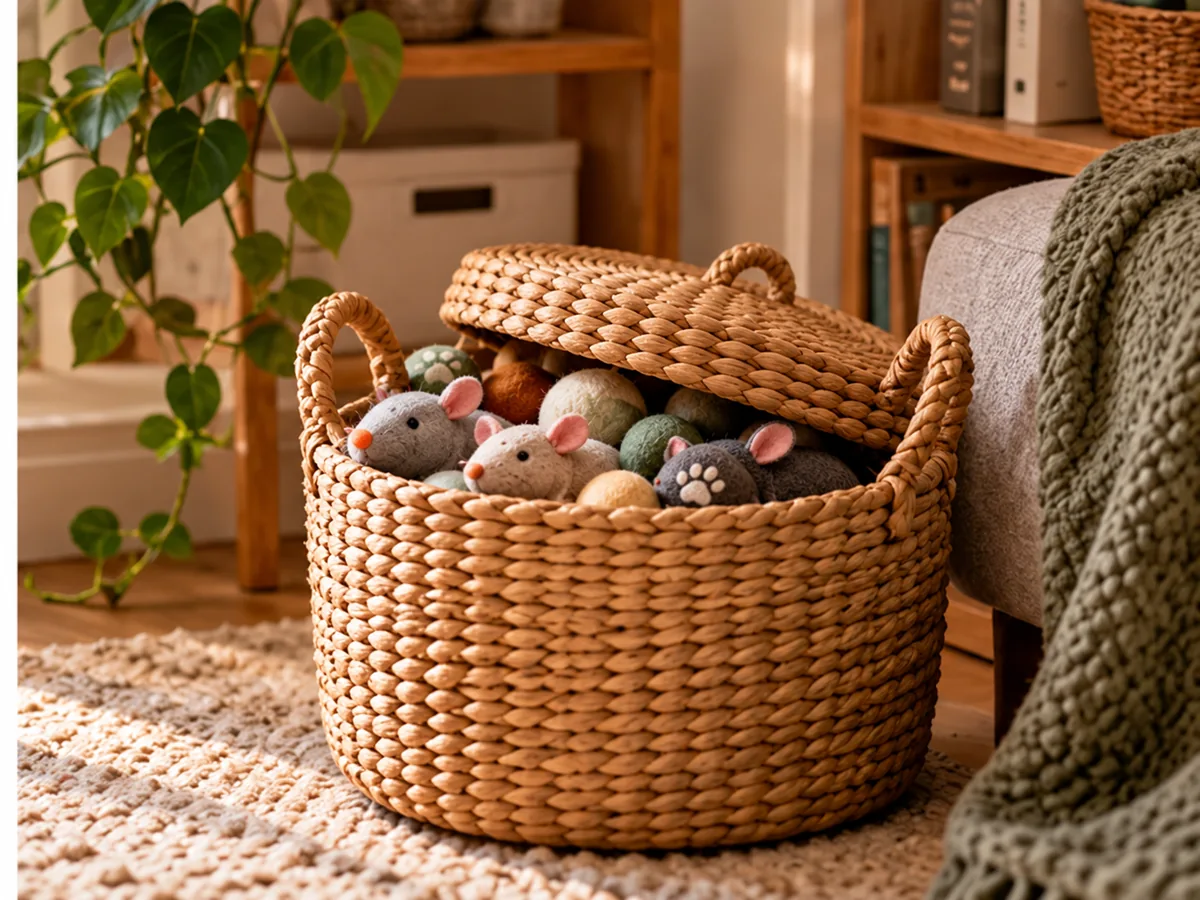
This partly open toy basket is a visual example of storage to avoid for unsupervised play. Inspect toys after play, then close them away where your cat cannot reach loose or detachable parts. AI-generated editorial illustration.
Mistake: Turning every activity into a purchase. Toy rotation and changing the use of existing space can be useful at little cost.
Mistake: Leaving wand toys unattended. Cornell warns that strands and detachable parts can be ingested [2].
Mistake: Pushing through disinterest. If your cat walks away, end the session and try later.
Mistake: Adding extra food with every puzzle. Use part of the regular food allowance and consult your veterinarian about portion adjustments when needed.
Mistake: Expecting play to solve medical symptoms. New lethargy, sudden aggression, appetite change, or litter-box problems deserve medical assessment.
Track enjoyment without turning your cat into a project
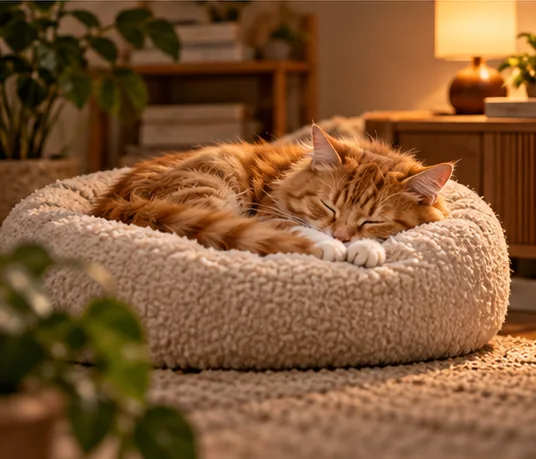
Allow plenty of downtime and observe your cat without forcing activity. AI-generated editorial illustration.
For one week, write down only three observations: what activity you offered, whether the cat chose to engage, and any issue that made it unsafe or frustrating. By the end of the week, you will have a more useful picture than a generic list of “must-have” toys.
If an activity is never chosen, replace it. If the cat repeatedly returns to one scratcher, hideout, or observation post, keep it accessible. The goal is a predictable home with meaningful options.
A realistic routine for unpredictable days
When your schedule changes, keep the activity flexible rather than trying to meet a rigid play quota. A familiar, short supervised game may be more appropriate than a longer session when your cat is tired, hesitant or recovering from a stressful event. Never force participation.
| What you observe | Practical next step |
|---|---|
| Cat watches but does not chase | Offer the toy more slowly, or stop and try at a different time |
| Cat enjoys stalking but loses interest quickly | Let it catch the toy, then finish rather than extending the session |
| Cat chews the wand, feathers or cord | Stop, remove damaged items and supervise all future use |
| Cat refuses a new puzzle feeder | Return to a familiar food routine; avoid withholding meals to encourage play |
| Sudden reluctance to move or other behavior change | Contact a veterinarian rather than treating it as a training issue |
Use food from the normal daily allowance for feeding activities when appropriate. Cats with prescribed diets or medical conditions may need individualized guidance before dietary routines change. The seven-day example is an observation aid, not a fixed exercise prescription.
Frequently asked questions
Do cats need play every day? Regular opportunities for activity and interaction are valuable, but the type and duration should be individualized. Offer choices rather than a rigid quota.
Can food puzzles replace interactive play? They offer a different form of enrichment. Many cats benefit from both independent food-seeking opportunities and positive human interaction.
Why does my cat stop playing quickly? Interests, motivation, stress, health, and activity timing can all matter. A sudden or persistent change warrants veterinary discussion.
Related guides
- 15 Indoor Cat Enrichment Ideas
- DIY Cat Toys Using Things You Already Have
- How to Keep Your Cat Entertained While You’re at Work
Sources and further reading
- AAFP/ISFM, Feline Environmental Needs Guidelines: https://pmc.ncbi.nlm.nih.gov/articles/PMC11383066/
- Cornell Feline Health Center, Safe toys and gifts: https://www.vet.cornell.edu/departments-centers-and-institutes/cornell-feline-health-center/health-information/feline-health-topics/safe-toys-and-gifts
- Cats Protection, Cats and Play: https://www.cats.org.uk/help-and-advice/cat-behaviour/cats-and-play
Editorial note: This is an adaptable activity example, not veterinary exercise or nutrition advice.
Illustration note: Images are original AI-generated editorial illustrations, not photographs of tested products or certified-safe installations. Follow the written safety guidance and manufacturer instructions rather than copying incidental visual details.
Keep exploring
DIY Cat Toys Using Things You Already Have: A Safety-First Guide
Make simple cat enrichment activities with cardboard boxes and household items while avoiding unsafe strings, loose parts, and choking hazards.
Read the guide →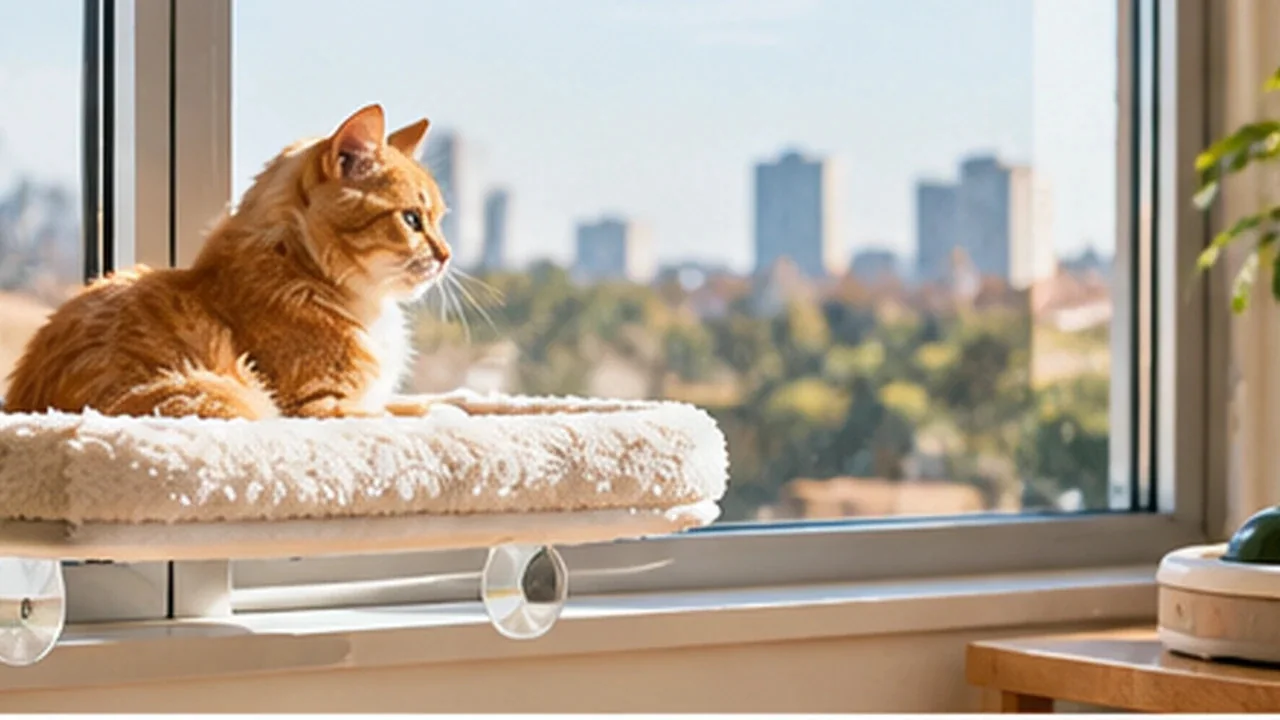
How to Keep Your Indoor Cat Entertained While You're at Work
Create a safer, more interesting day for your indoor cat while you're at work with a practical before-work checklist and low-maintenance activities.
Read the guide →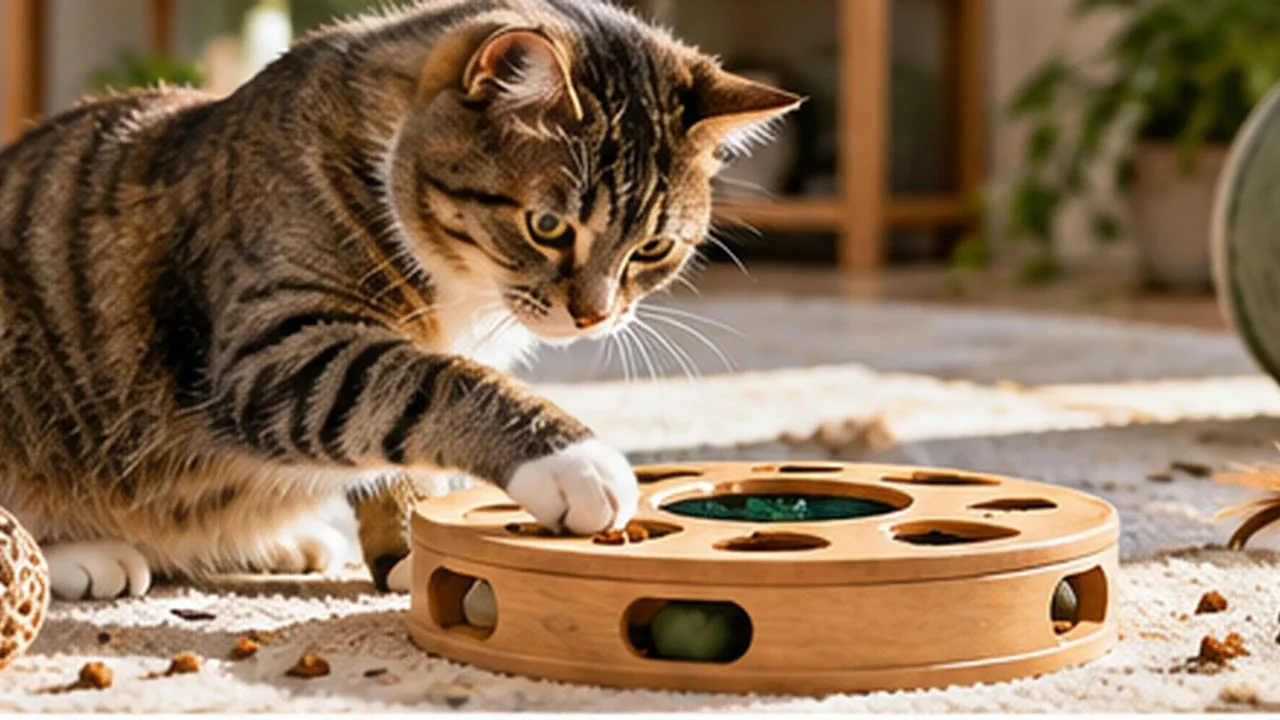
15 Indoor Cat Enrichment Ideas That Don't Require a Big Home
Try 15 practical indoor cat enrichment ideas, from puzzle feeders to safe climbing spaces, with tips for adapting activities to your cat.
Read the guide →Cat behavior and needs vary. For sudden behavioral changes, health concerns, or individualized medical advice, speak with your veterinarian.
← Explore more guides