
THE NOTEBOOK / SMALL SPACE, BETTER DAYS
A little room.
More thoughtful choices.
An original planning example for a 3 × 4 m living room (about 9.8 × 13.1 ft). Start with existing furniture and keep the center useful.
Mew & Maple · Planning example · October 18, 2026
The idea in a minute
Give the room more than one purpose: a place to watch, retreat, scratch and play. Keep paths open and check the rest of the home before treating one room as a complete setup.
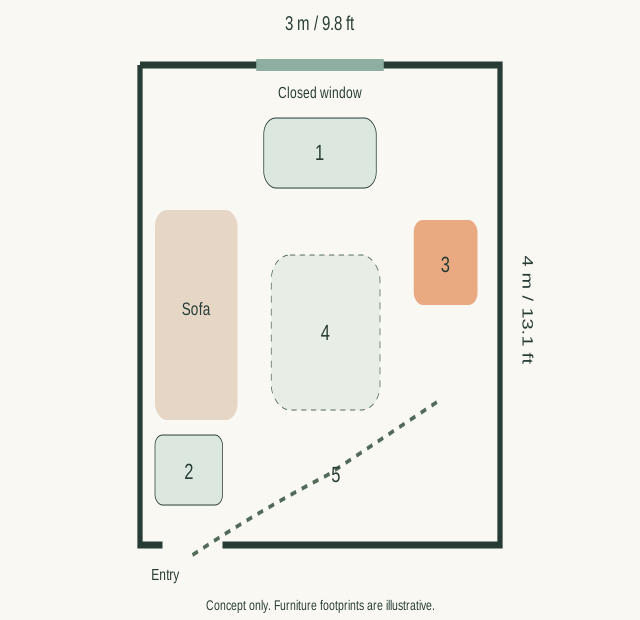
Read the five zones
- Watch and rest. A stable, reachable resting place near a closed window. Select support and access for the individual cat; follow product installation instructions.
- Retreat. A simple hideaway beside existing furniture, with an unobstructed way out. Avoid making the exit part of a busy doorway.
- Scratch. A stable surface near a route the cat already uses. Confirm the actual footprint and that it does not block people or doors.
- Play. A flexible patch of open floor for supervised interaction. Store strand-like toys and loose pieces after use.
- Move freely. An open route through the room, including the door's actual swing. The dashed route shows intent, not a measured clearance standard.
What this plan leaves elsewhere
This is one living room within a larger home. Food, water and litter resources must also be accessible in appropriate separated locations. The diagram does not assess those locations or establish that the whole home meets a cat's needs. It is not a multi-cat resource plan.
Adapt before you copy
- Measure the real room, furniture, door swings, heaters and accessible windows.
- Check reach and routes for your cat's age, confidence and mobility.
- Use existing furniture only when its stability and use are suitable. A diagram cannot certify an attachment or load limit.
- Try one change, watch voluntary use and adjust. Do not force a cat into a new resting place.
One thoughtful change this week
Sketch the route your cat already uses. Choose one resting or scratching opportunity along it and check that your change keeps access open. Use the home checklist to review what lies outside this room.
Sources behind the approach
The plan is our own editorial example. Its emphasis on safe places, separated resources and play draws on the AAFP/ISFM environmental guidelines. Toy cautions draw on Cornell's toy guidance. Neither source evaluated or endorsed this diagram.